
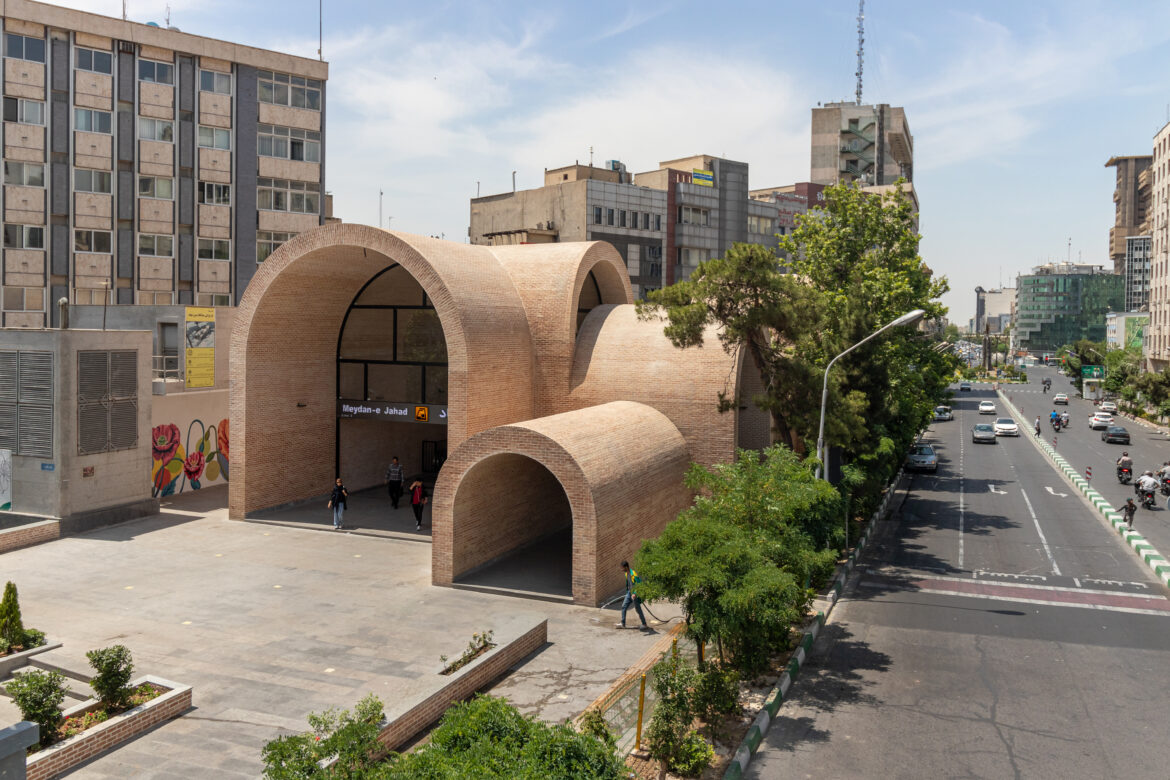
محطة مترو ميدان جهاد
استوديو معماری کا
طهران | إيران
Project History
Tehran once featured a livable and low-density historic core, which, following the Iranian Revolution, underwent significant change due to population growth and centralized policies. Tehran’s development adopted a car-oriented model. This approach gradually reduced the urban quality of life for pedestrians and diminished the city’s overall livability. This shift limited spaces for citizens to interact, exacerbating pollution and the scarcity of public spaces. For decades, economic constraints and sanctions prevented meaningful intervention, creating a major management gap in public-space planning.
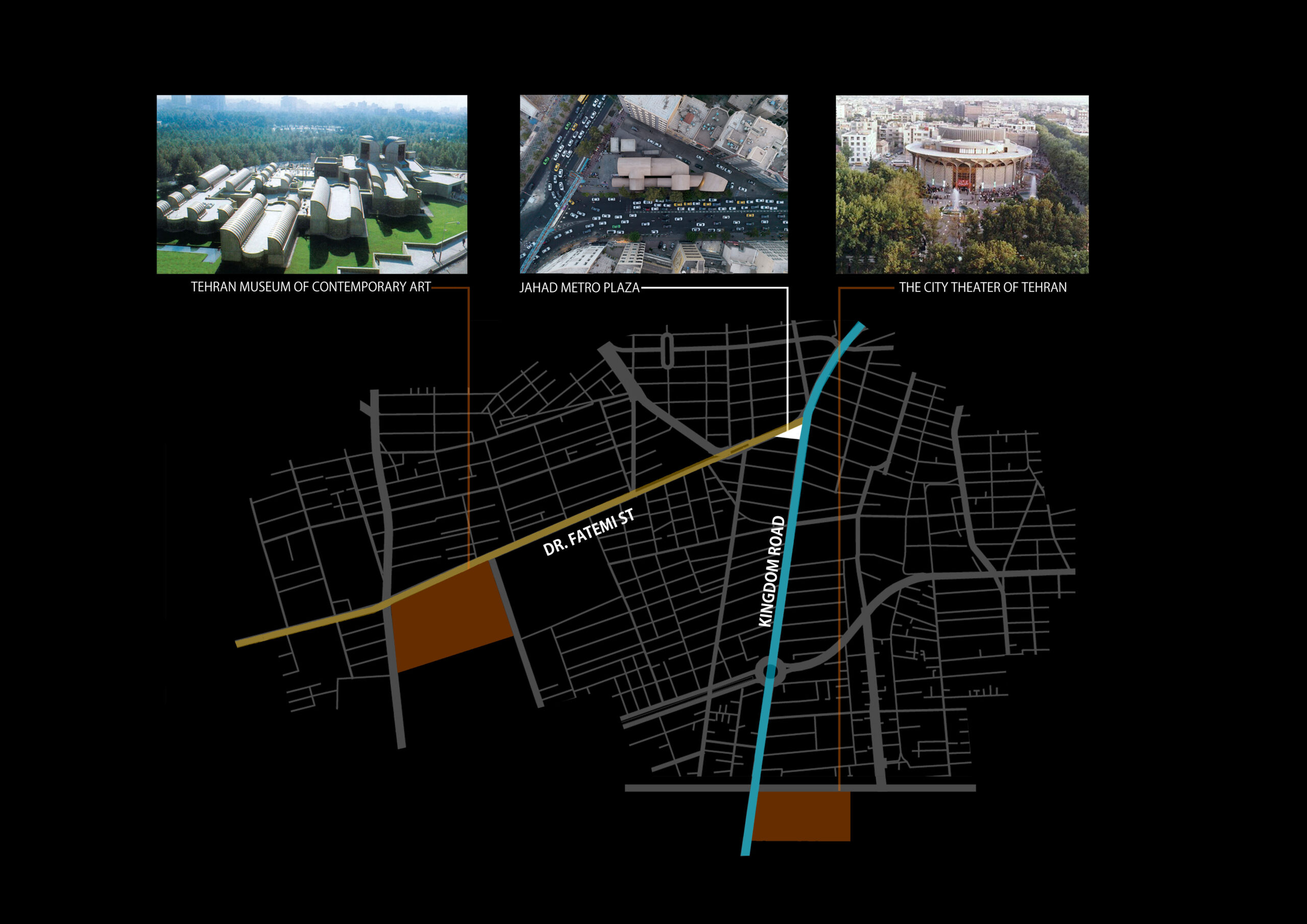
A project called “Meydangah” was initiated. The project aimed to identify and activate underutilized or low-quality spaces with the potential to become vibrant urban nodes. The plan was to revitalize spaces such as parks, sidewalks, underpasses, and neglected areas as pilot projects. Upon success, this initiative would expand to other areas across the city to foster a “pedestrian-oriented city.”
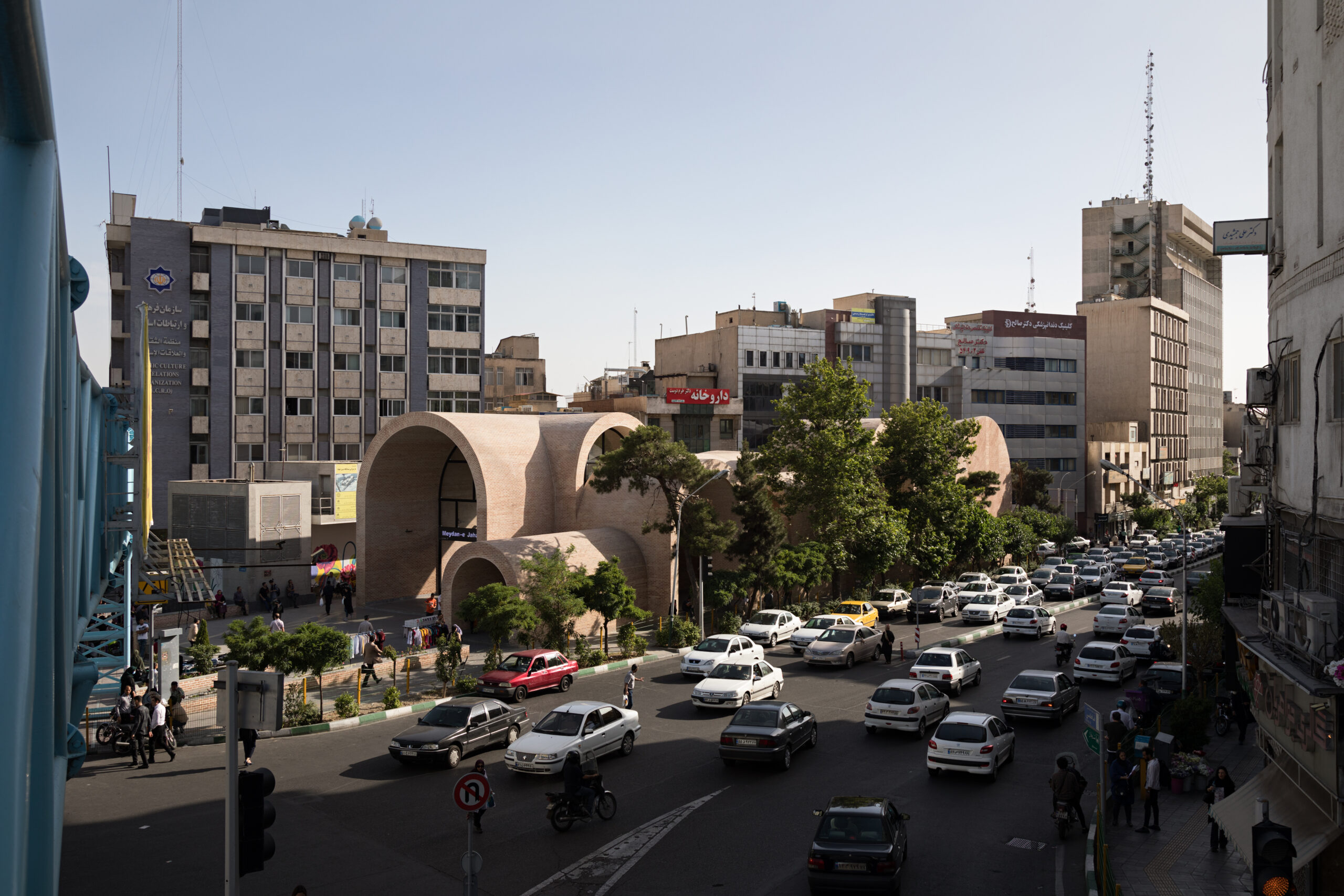

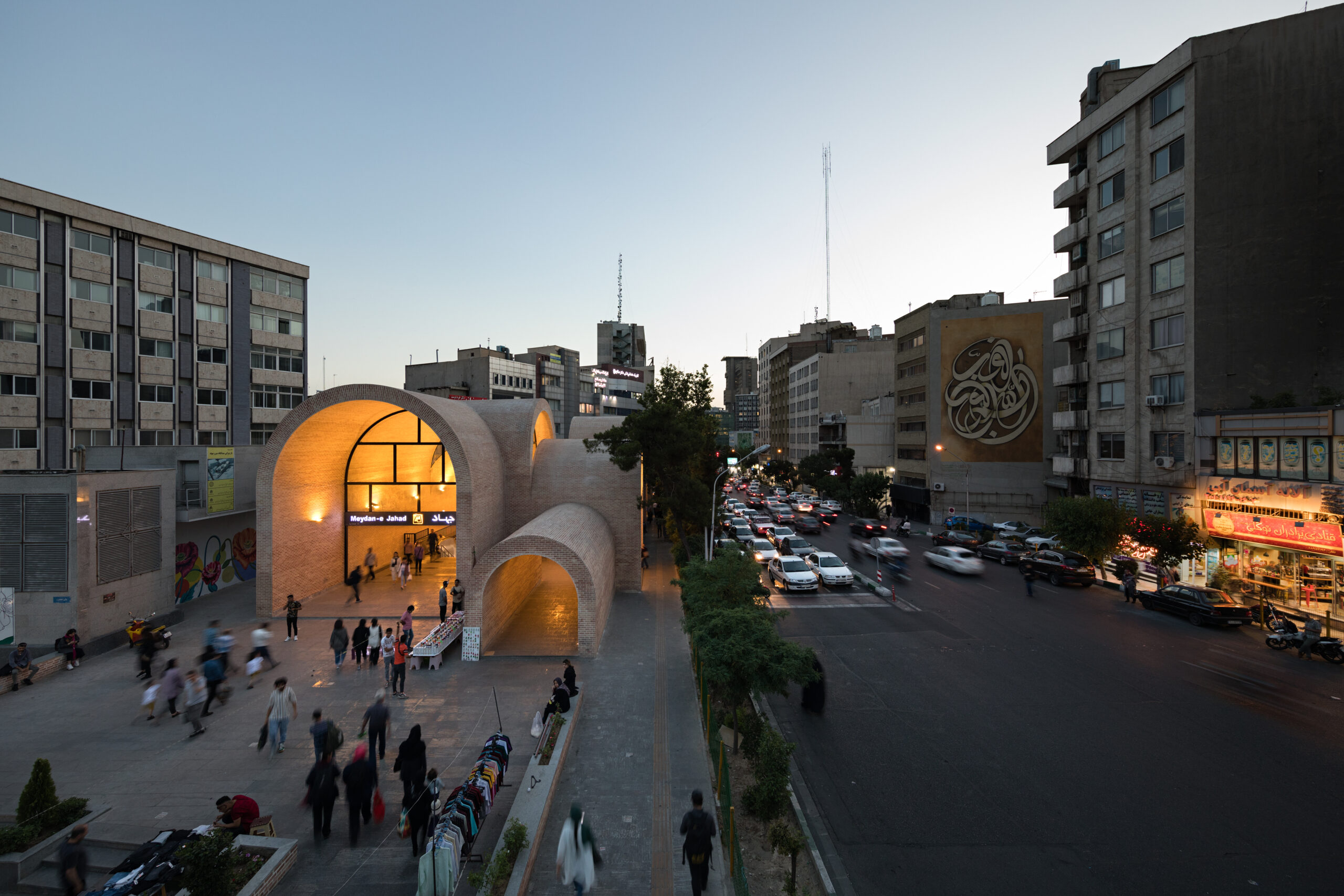
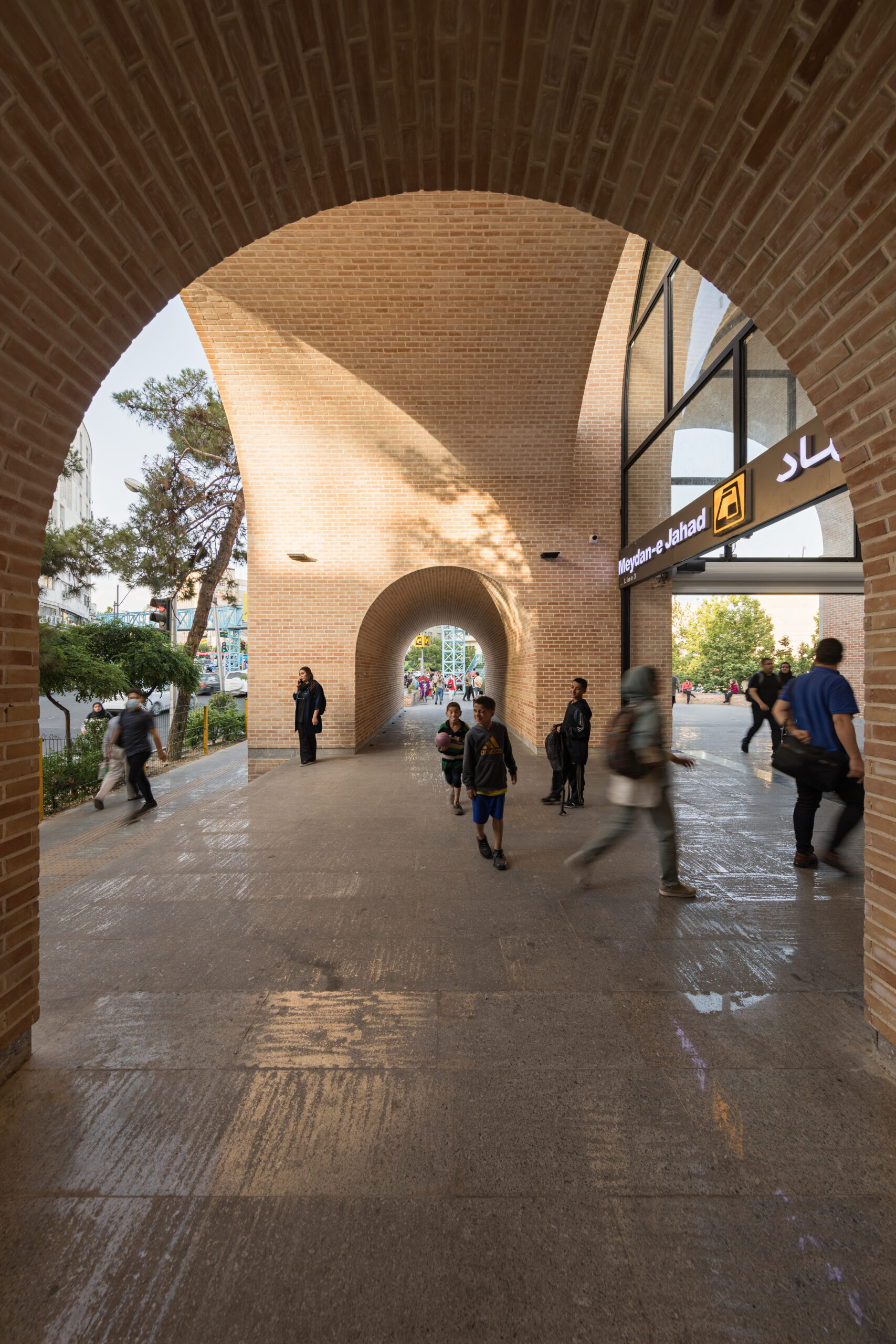
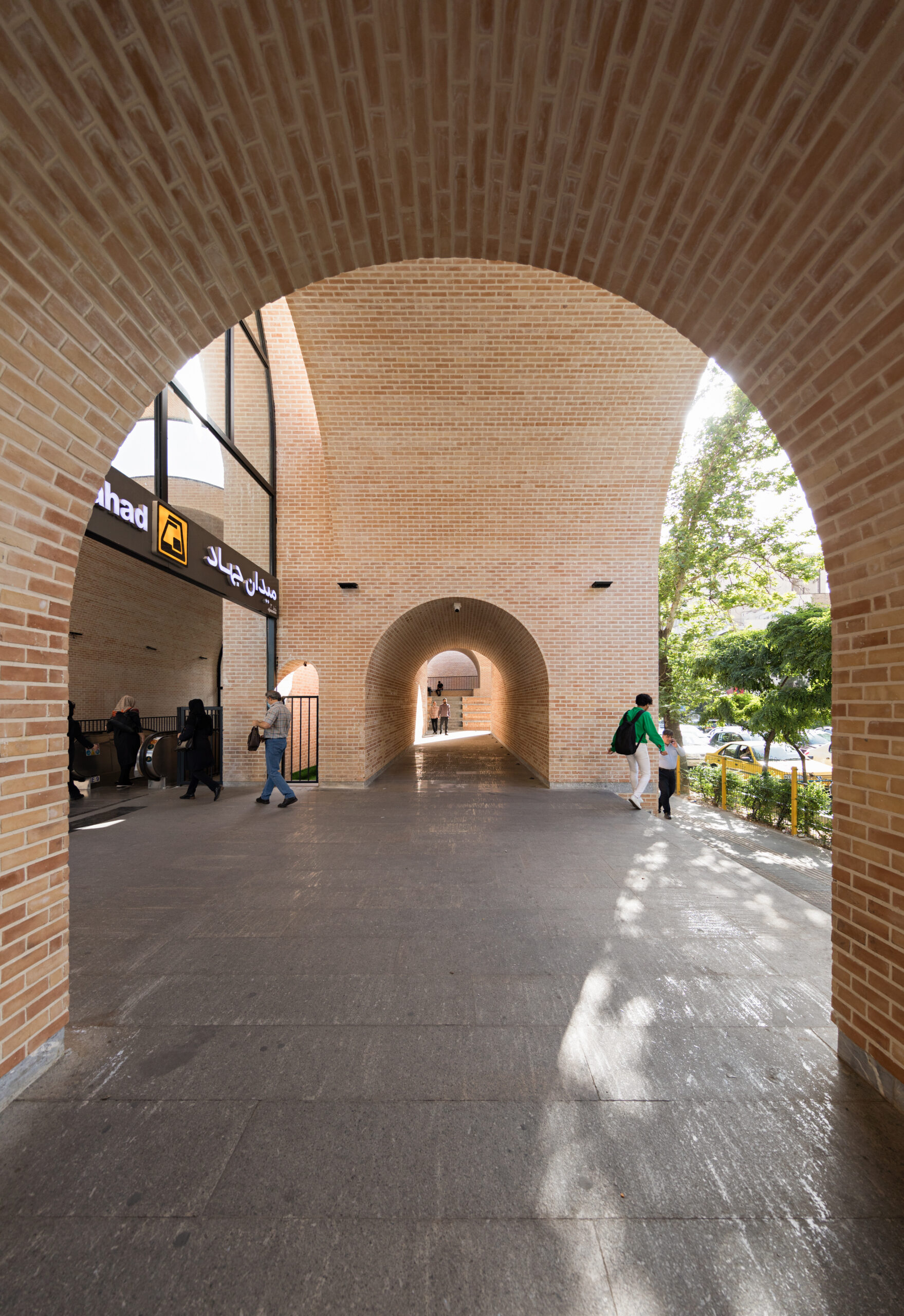
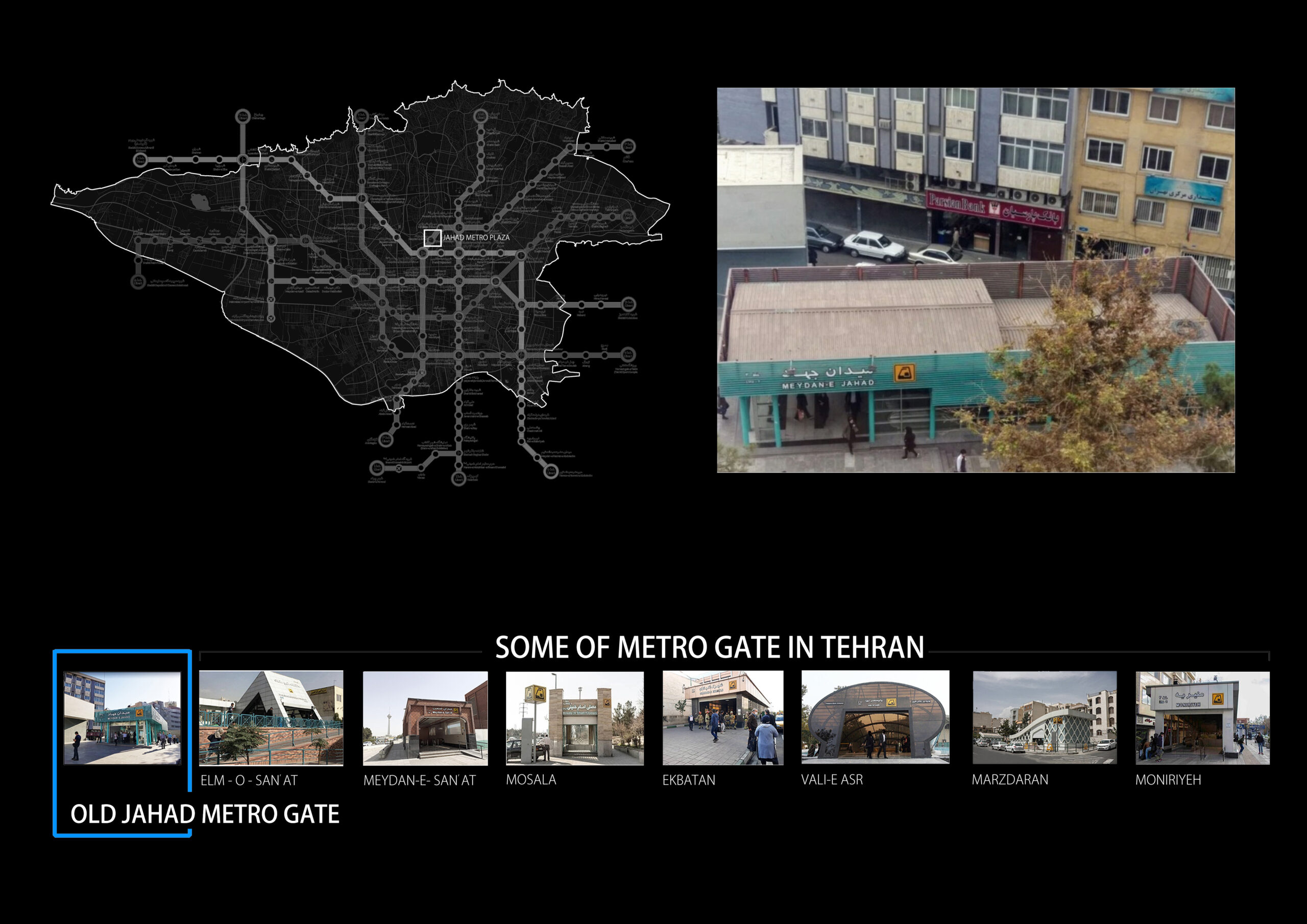
One such project was the entrance to a metro station at the intersection of “Vali Asr” Street. Metro entrances have often been developed in a haphazard manner, disregarding pedestrian needs. This neglect has led to multiple issues for users and local residents, diminishing urban quality. Initially, due to budget constraints, the client requested a basic sidewalk design. After extensive discussion, a more impactful project aligned with the master plan was developed, leading to the success of the “Meydangah” project. Currently, the plaza area in front of the entrance has been organized by the municipality for local vendors, and the inner plaza space has become a social hub for activities such as sitting, waiting, and hosting street musicians.


PROJECT DESCRIPTION
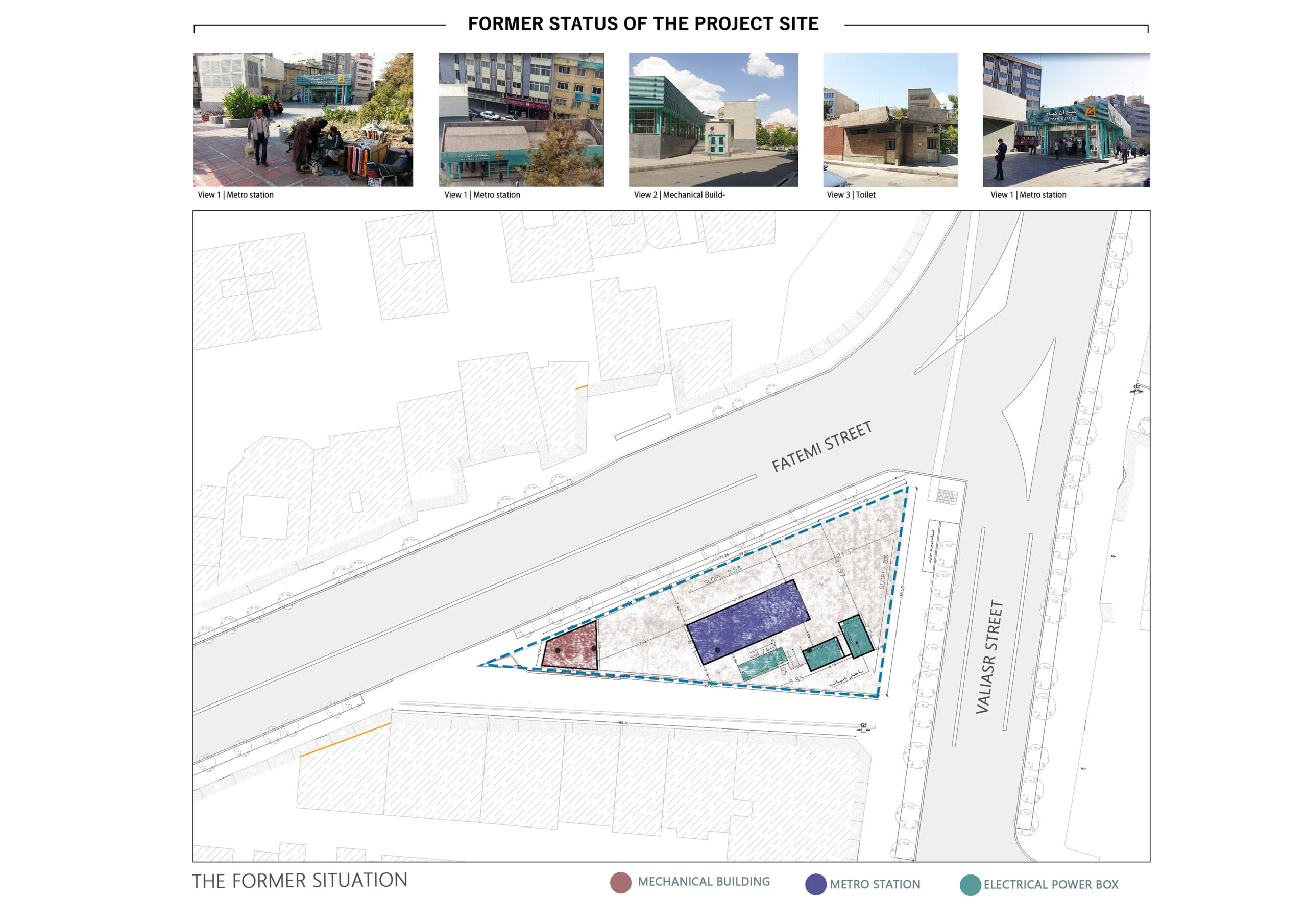
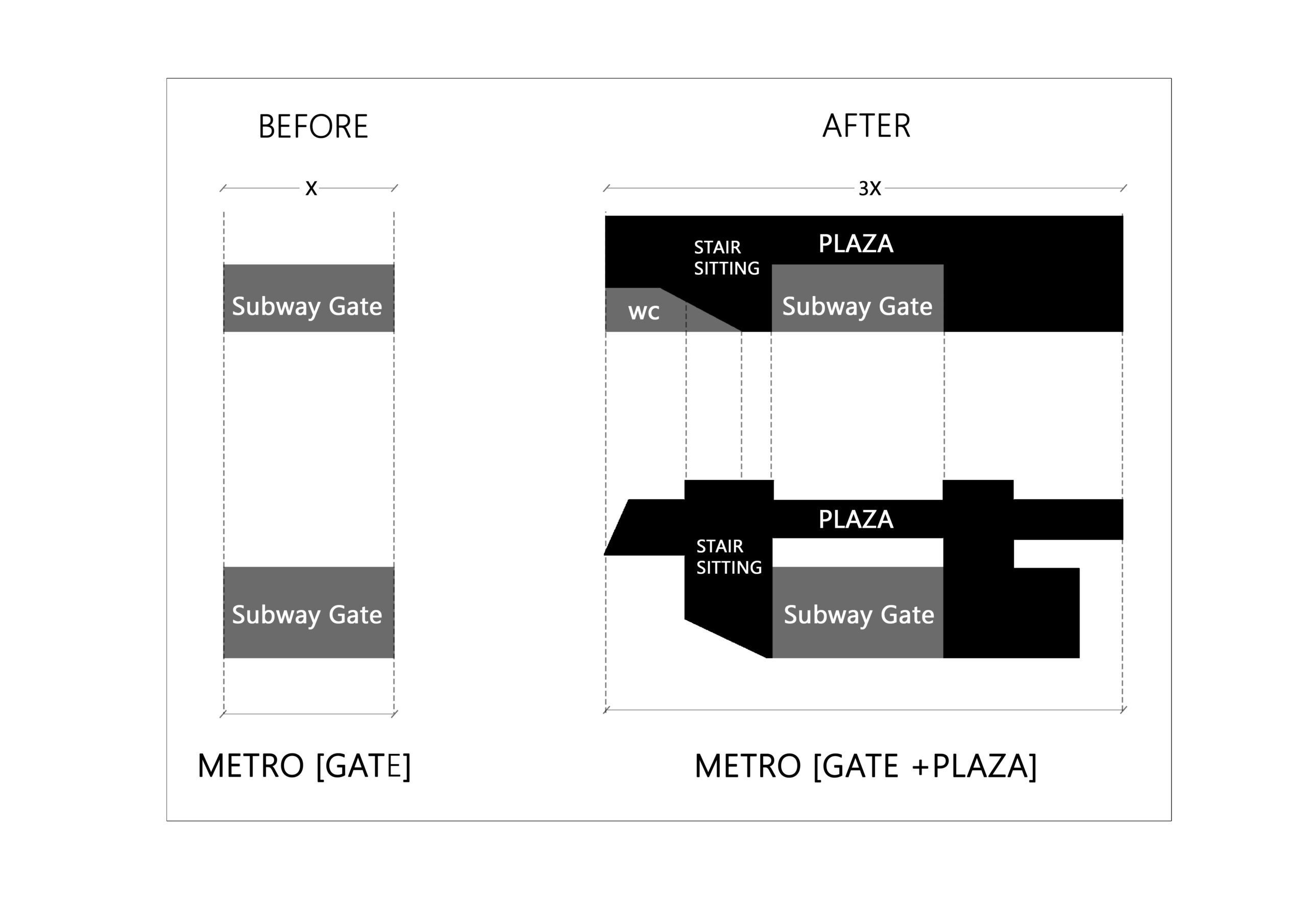
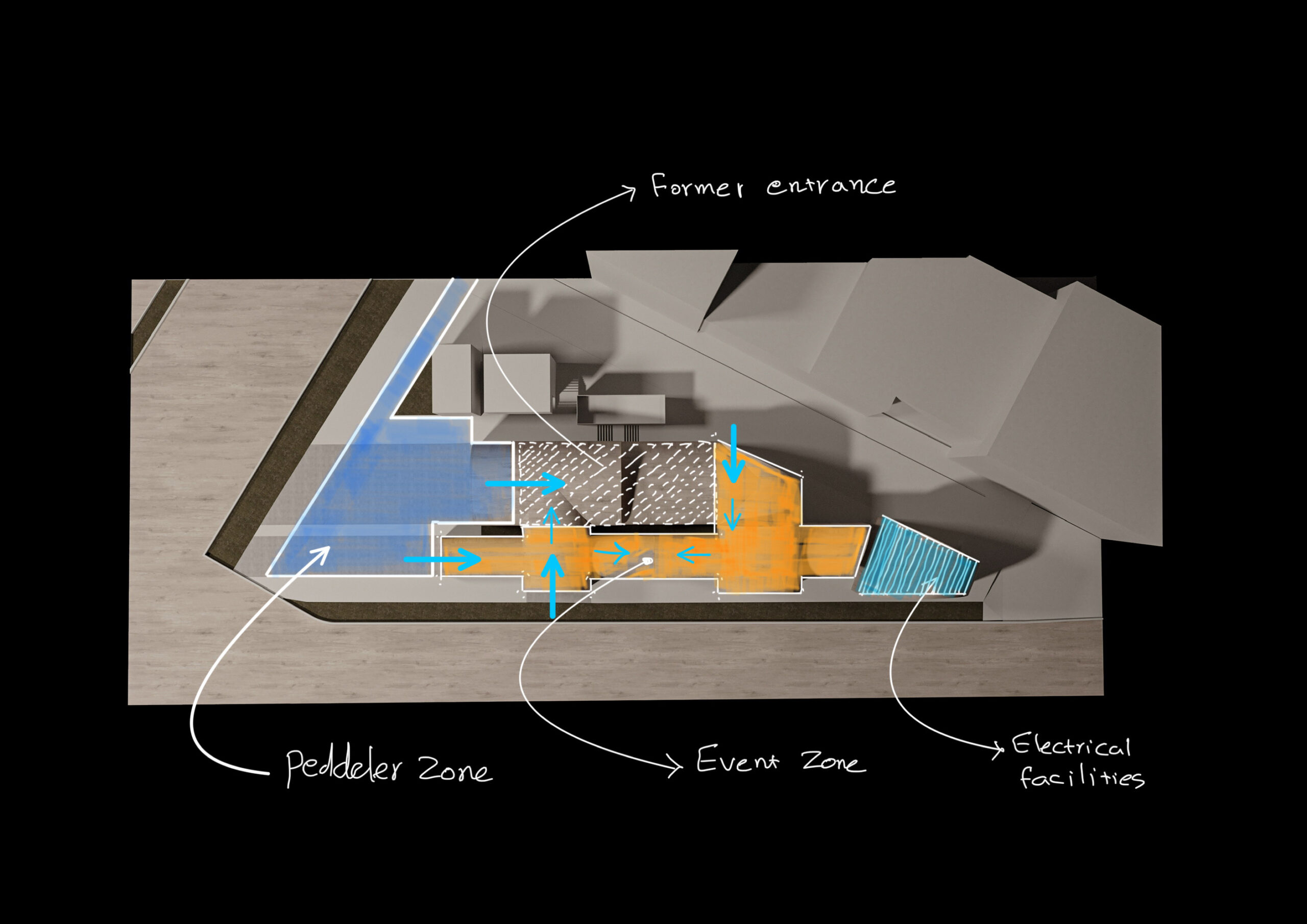
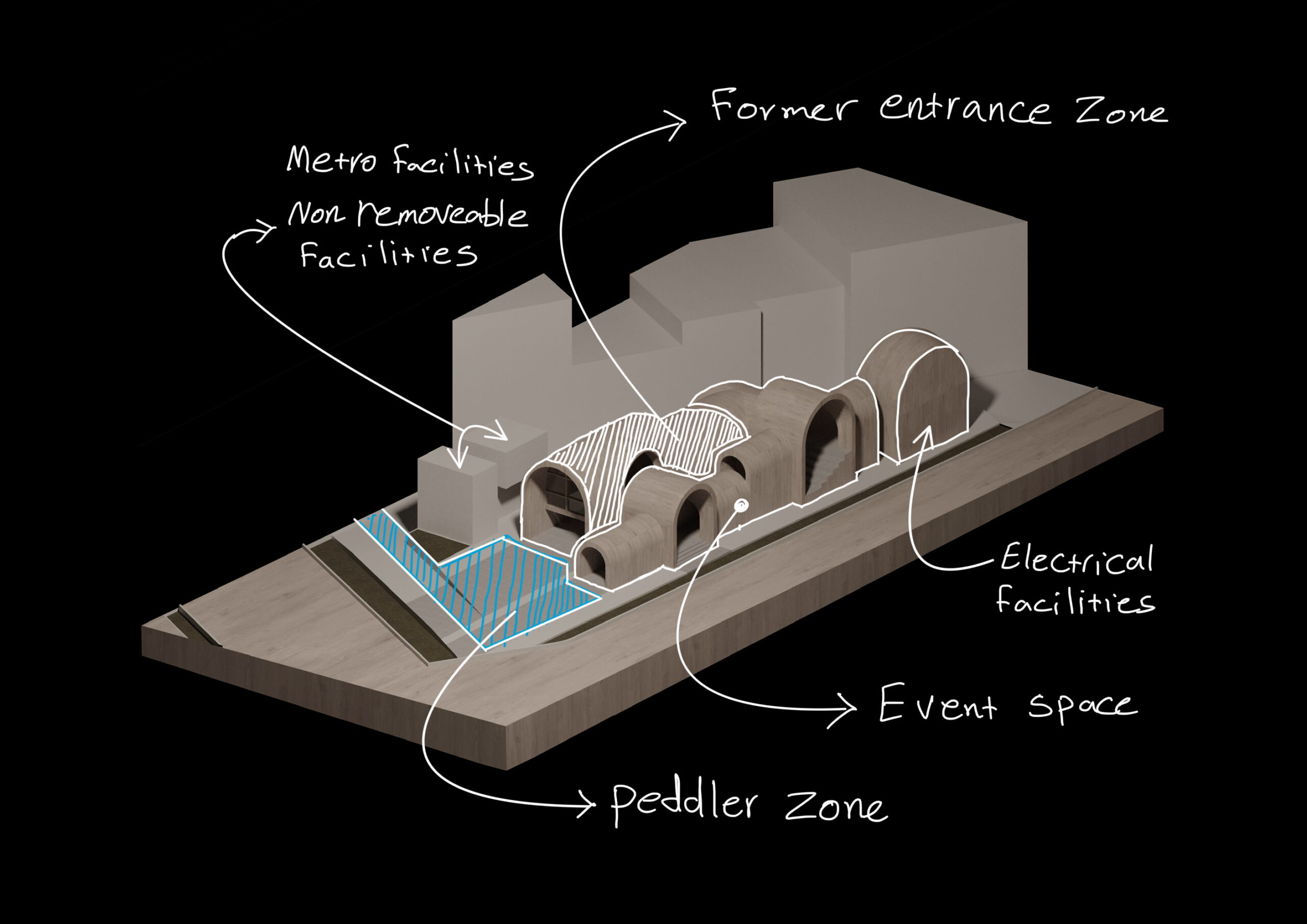
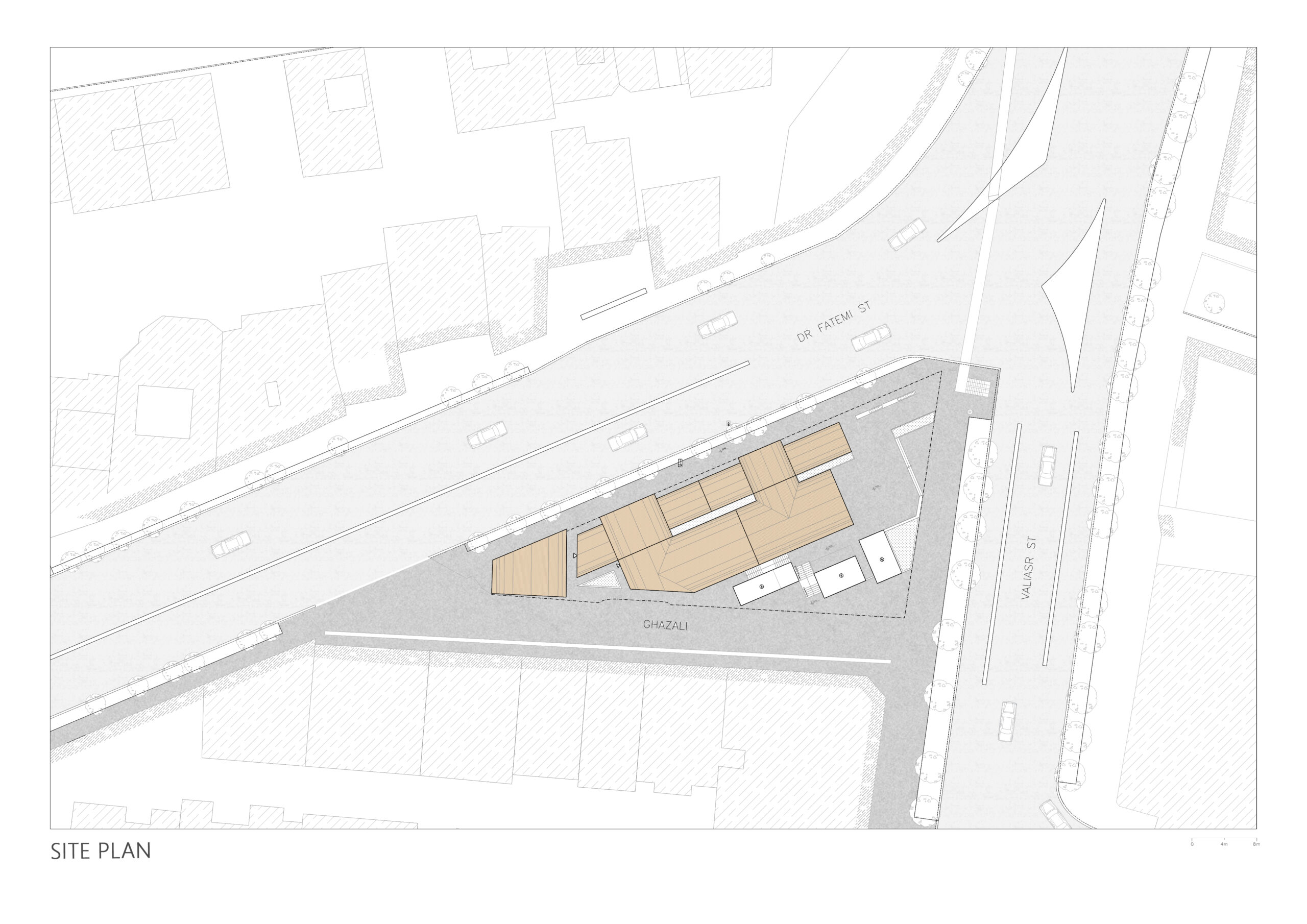
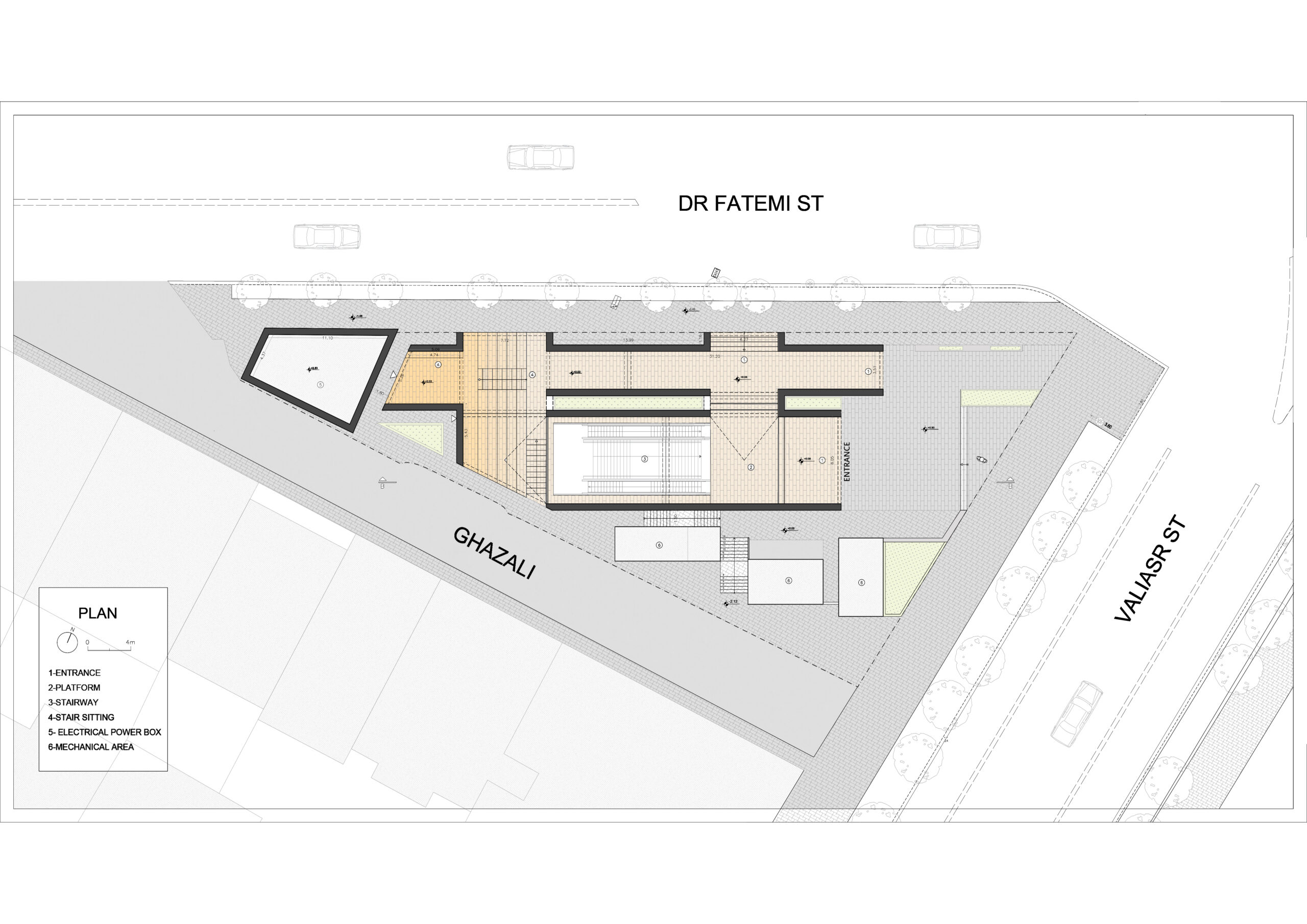
Due to its location at the intersection of one of the city’s major corridors, this metro station had relatively accessible land within a dense urban block. However, it was simultaneously affected by heavy vehicular traffic, leading to noise pollution and reduced spatial quality at the entrance. The site was triangular in shape, covering an area of 1,500 square meters, with various characteristics that needed to be reimagined. Among the existing structures, there was a low-quality, cube-shaped glass entrance enclosure, covering the entrance staircase. This structure only had a single shutter door for passenger entry and exit, lacking both spatial quality and architectural appeal. Additionally, two restrooms for men and women were located in the space but were positioned poorly and inconveniently. The area around the entrance was also cluttered with scattered metro infrastructure, distributed without a clear plan. Other sections of the land remained abandoned and unused, suggesting that a cohesive design for optimal use had not been considered.
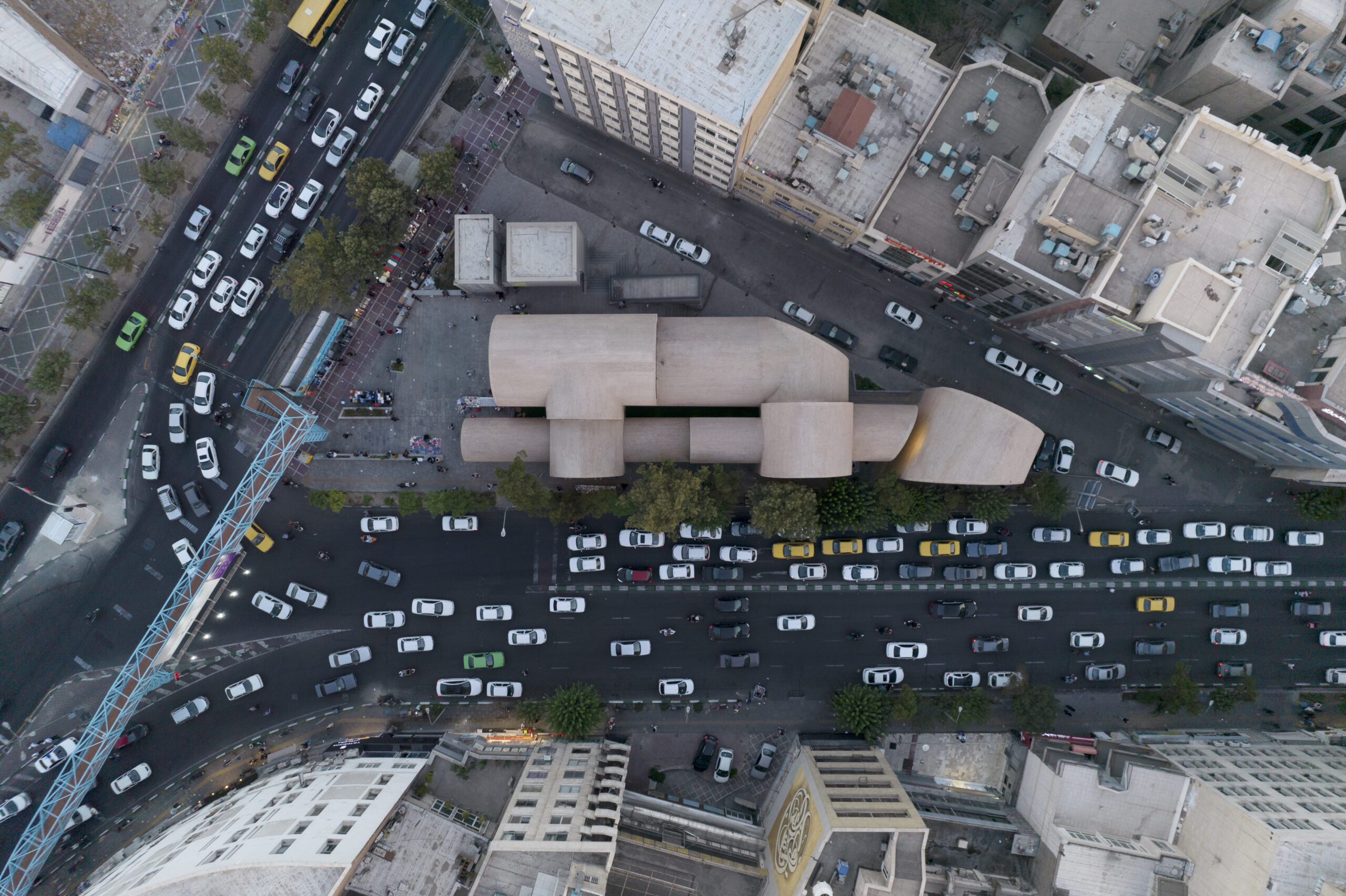
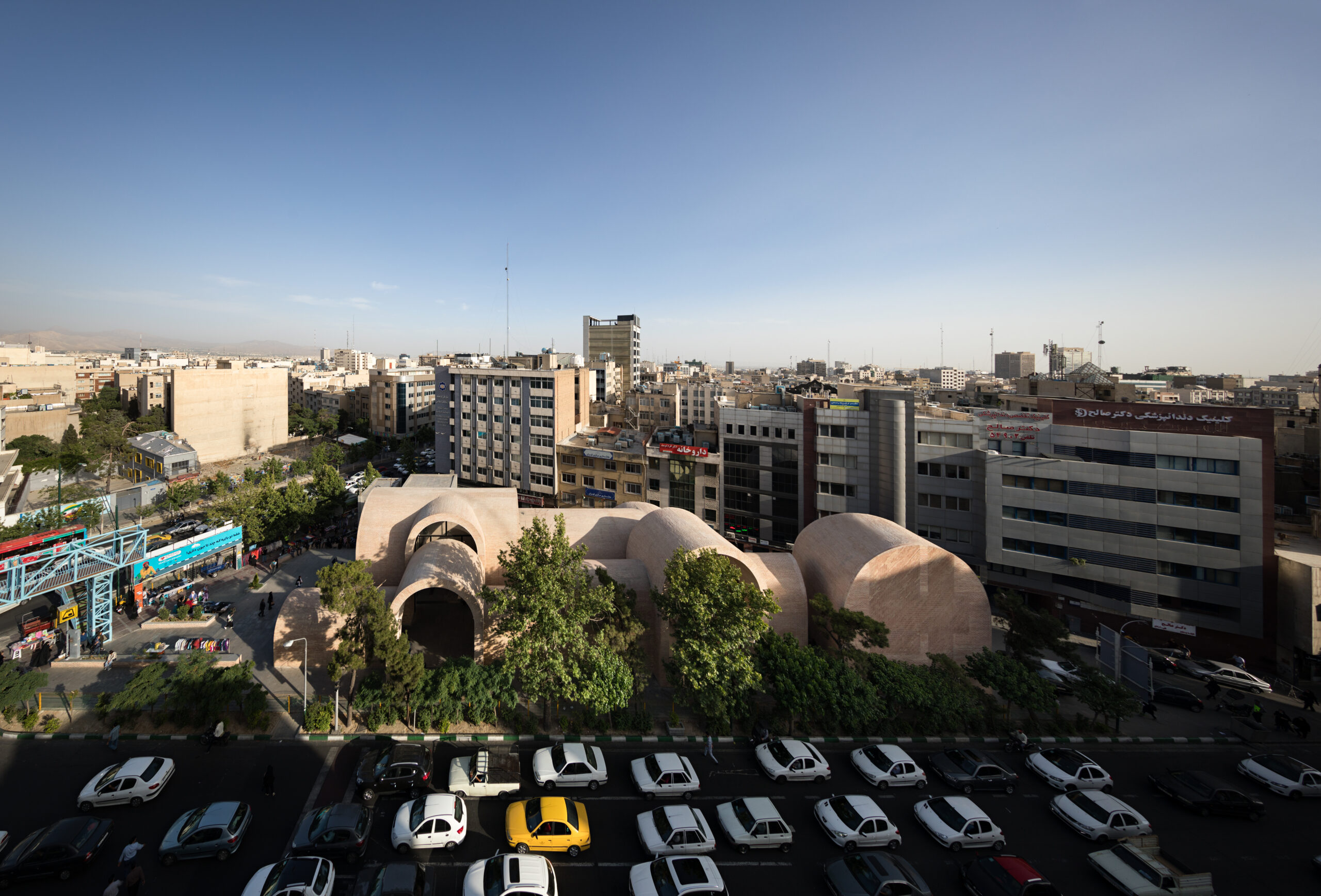
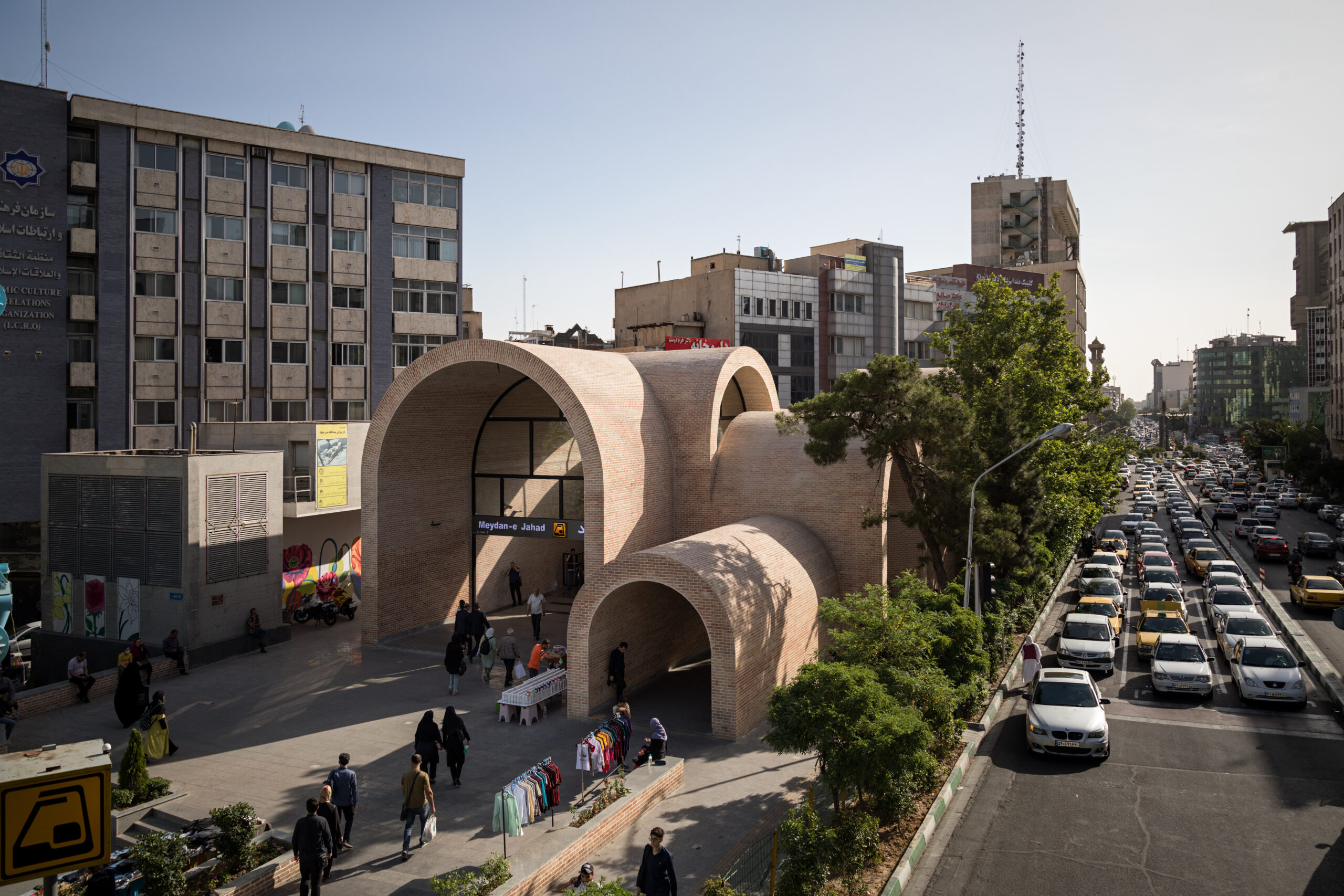
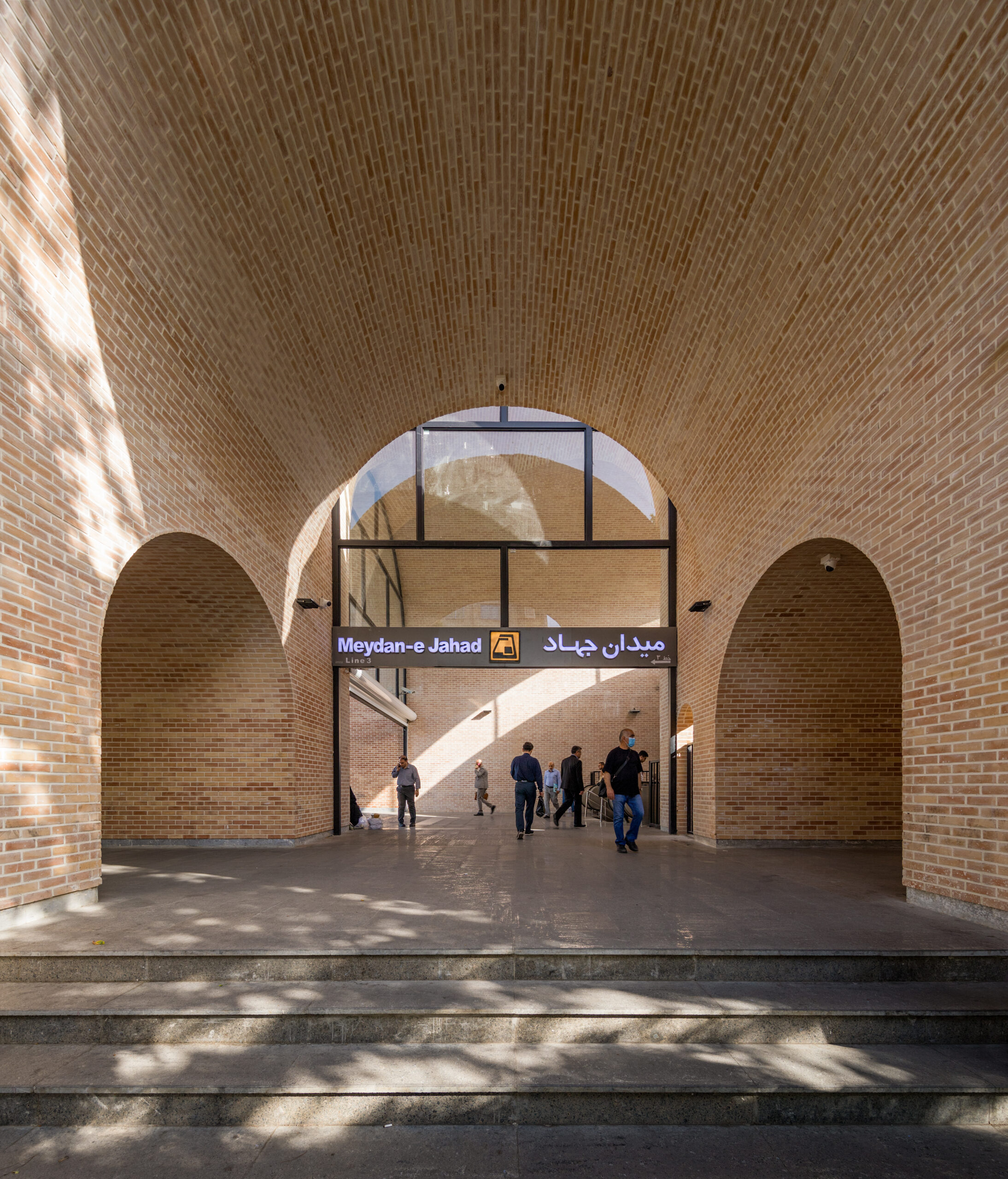
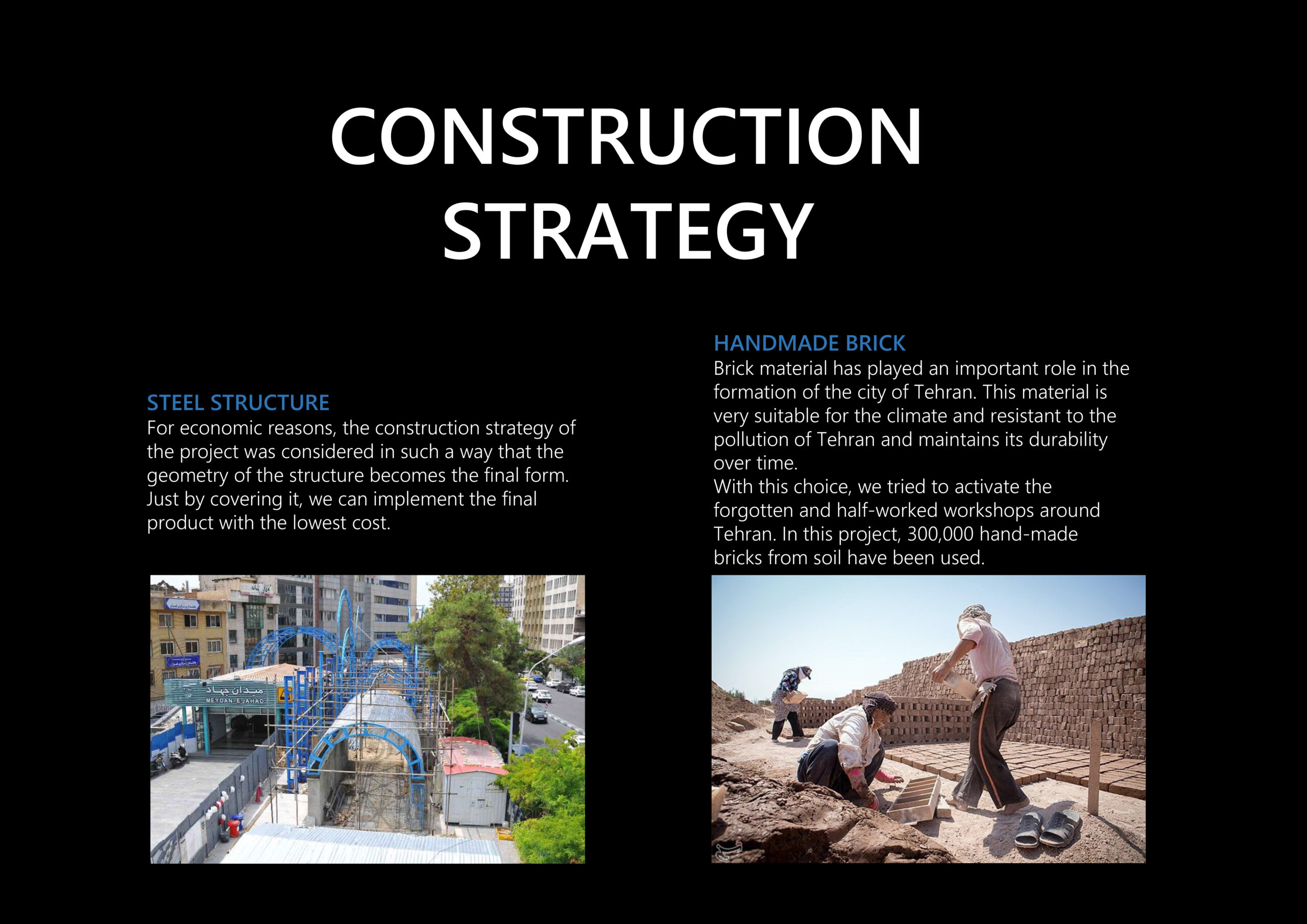
After gathering data and identifying the urban needs of the chosen site, we decided to create a comprehensive design plan. Considering Tehran’s climate, creating shade for the hot seasons and shelter from rain in colder seasons were priorities. Additionally, to mitigate noise pollution from the high traffic around the site and to foster an inward-facing, livable space, we concluded that a permeable roof, allowing light and air, would be a key design strategy. This roof was chosen as a solution to unify and cover the site’s inconsistencies and damages, aiming to harmonize the environment and improve the quality of the existing spaces. Based on preliminary requirements and study results, we decided to address all spatial issues on the site through a cohesive, unified structure, aligning existing elements and realizing desired functions within a space with a clear identity.
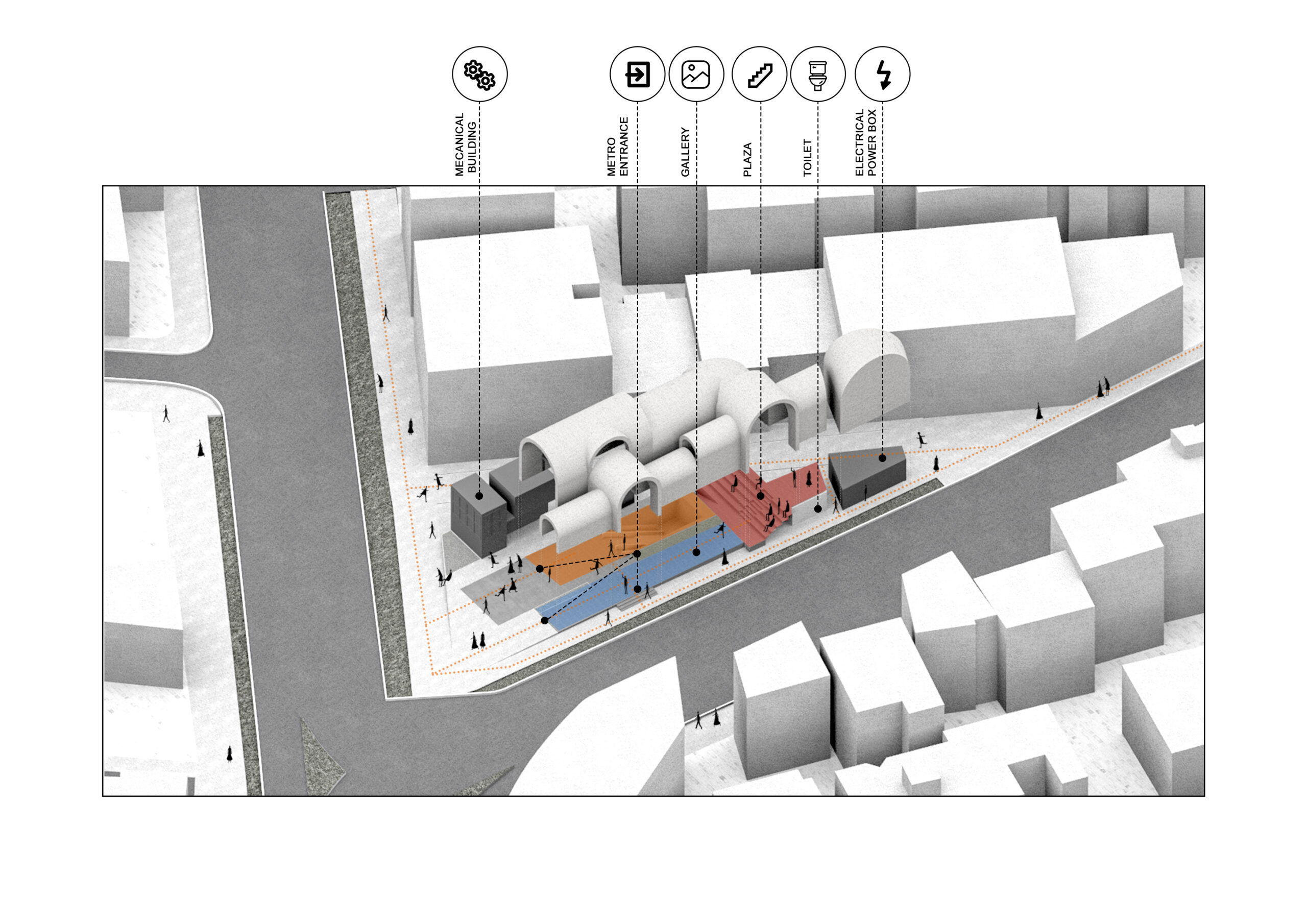
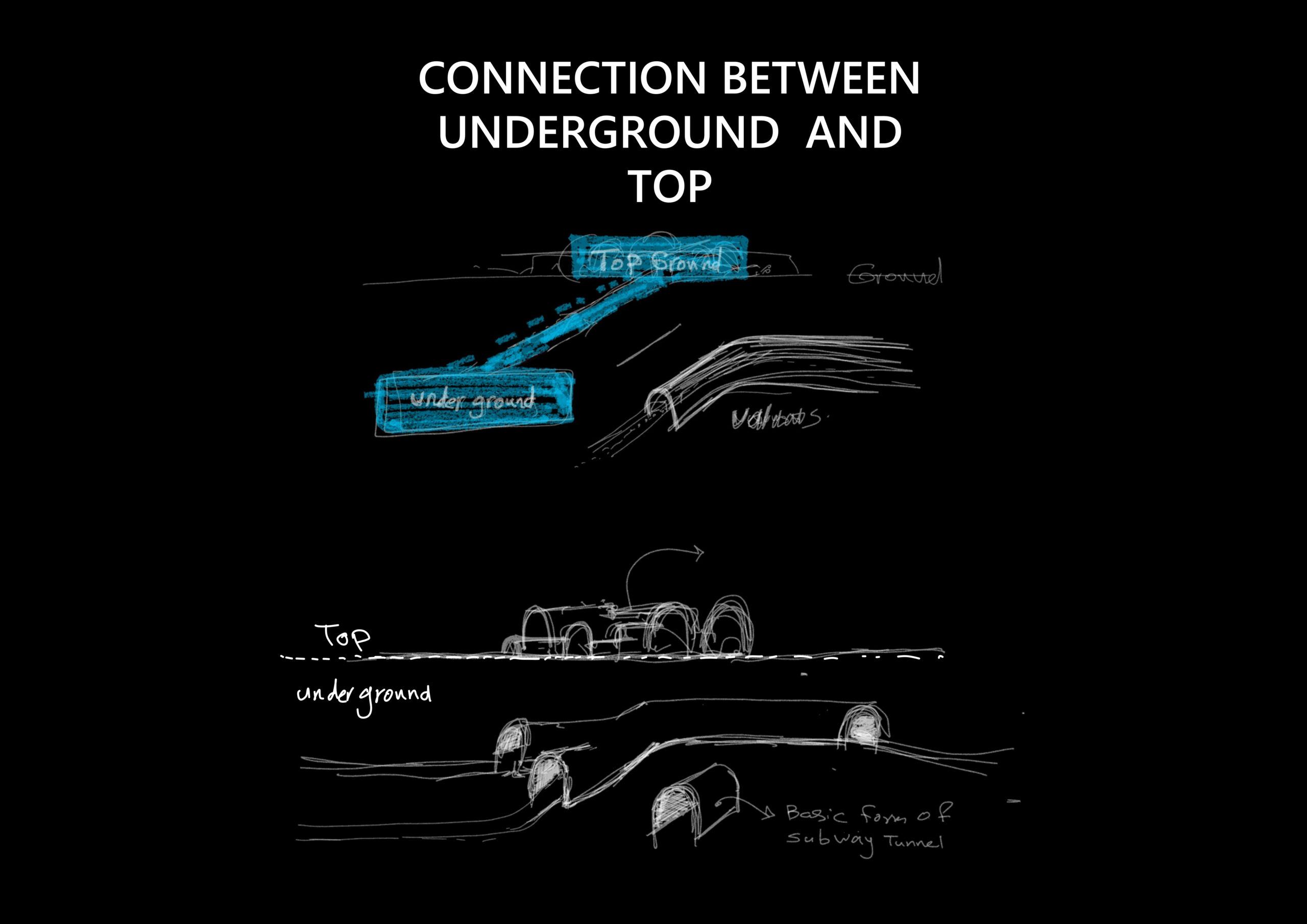
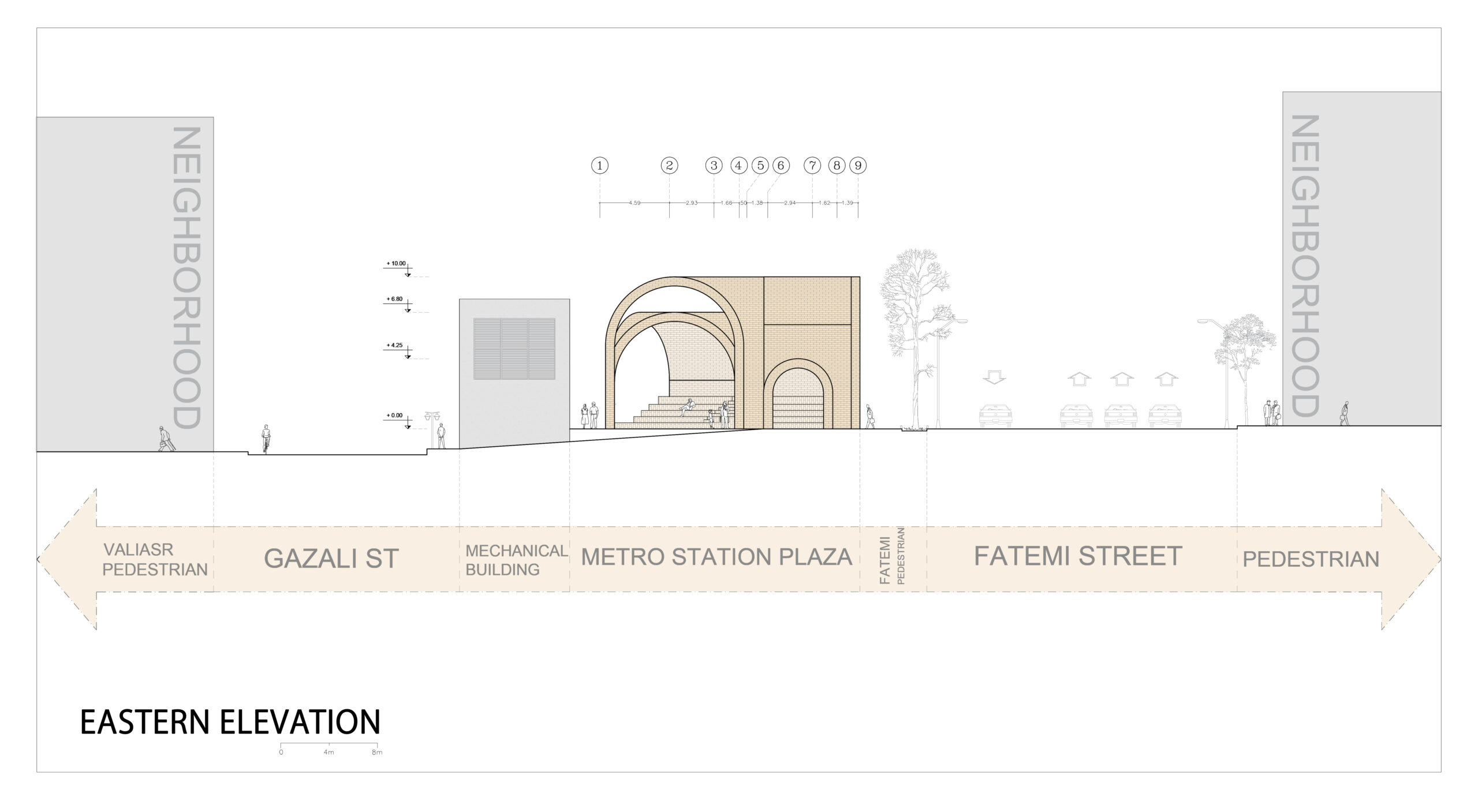
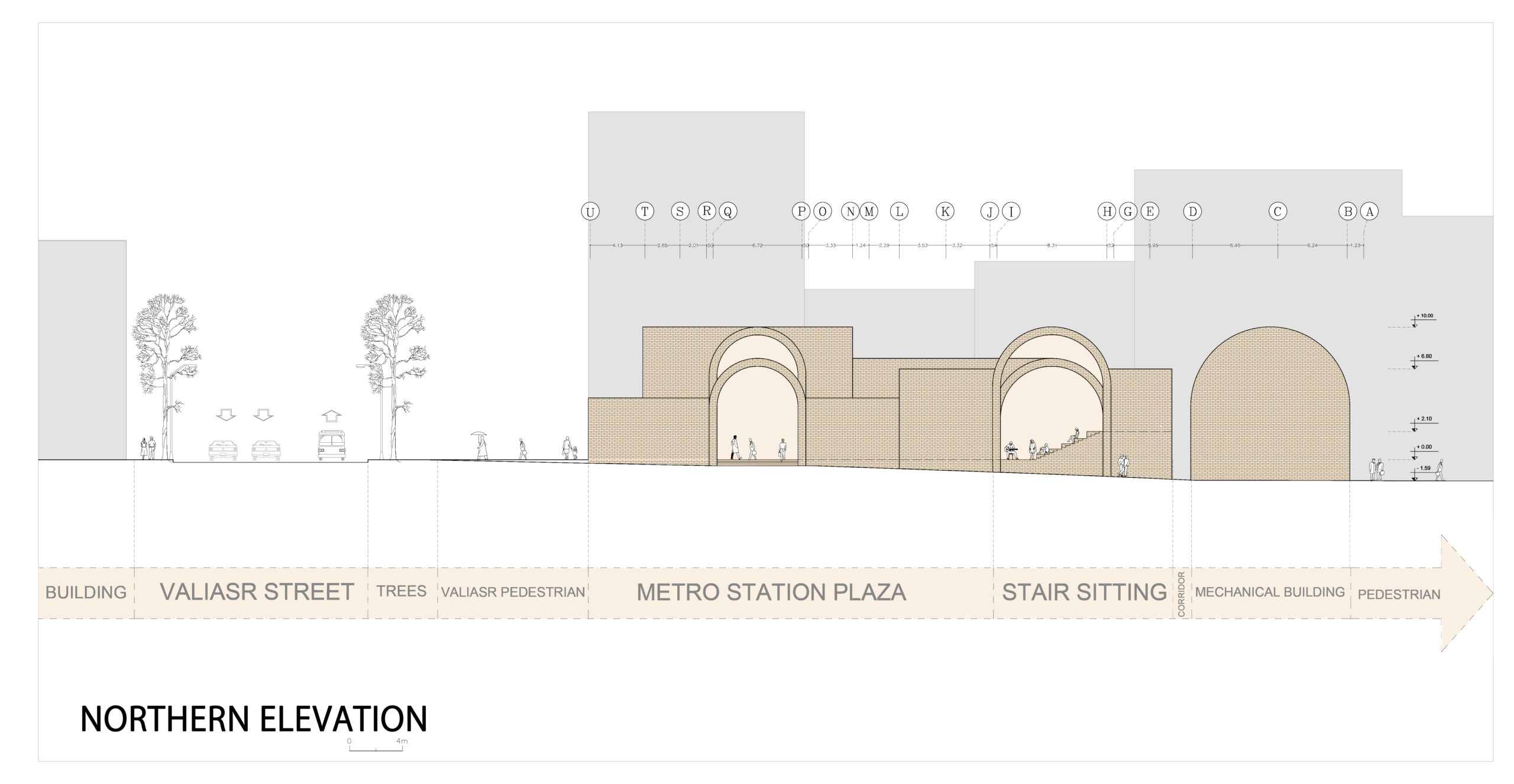
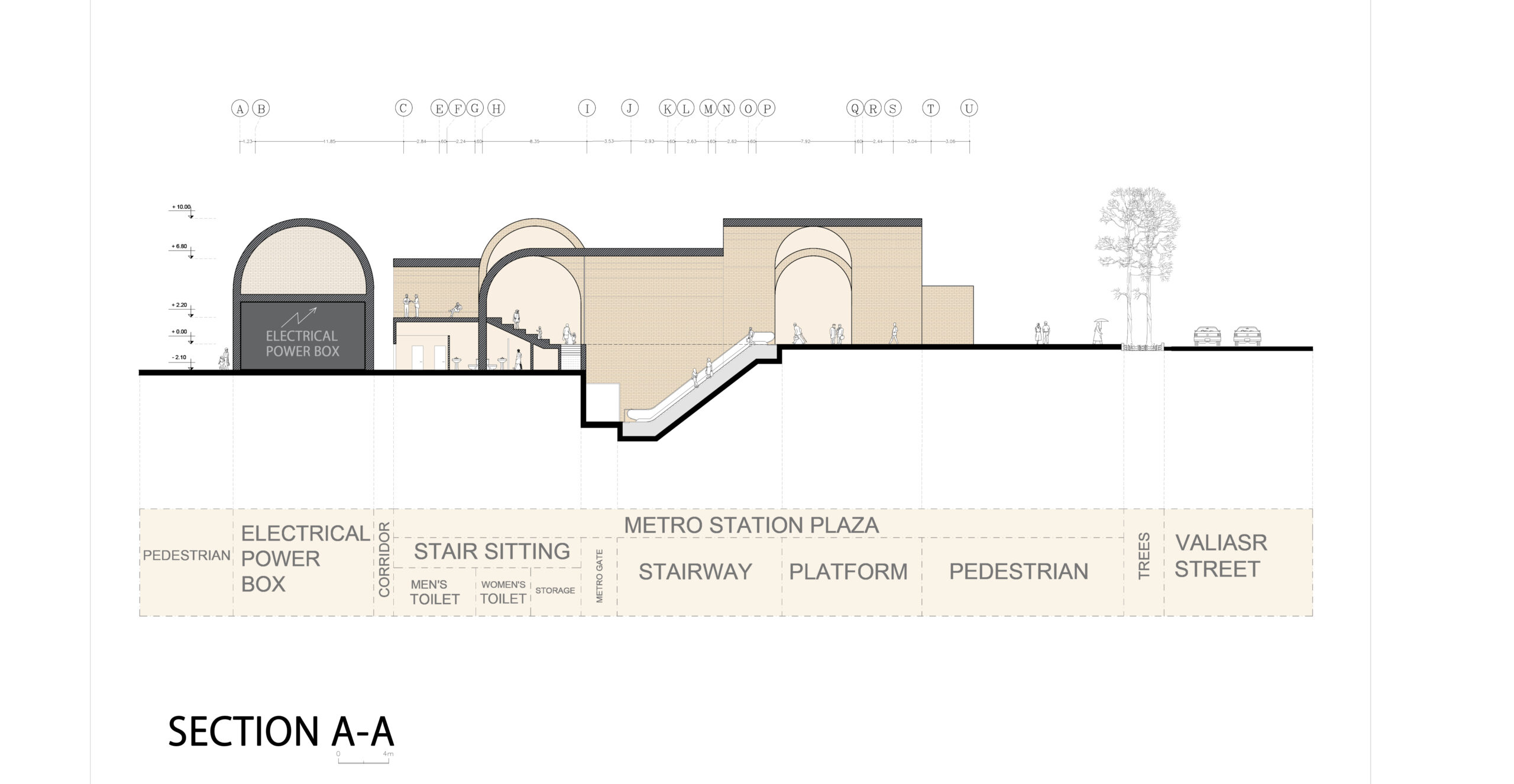
In defining the geometric and formal strategy for this project, we were struck by the gap between the lower metro area and the ground level above. This challenge led us to incorporate a combination of geometric arches, forms that represented the below-ground spaces and their functionality while being executable with local methods. These arches became the primary spatial strategy to establish a strong visual and functional connection across different site levels, organizing the spaces below and adding formal coherence to the entire structure. By arranging these arches, we transformed the metro’s subterranean area so that the ground-level metro entrance became a “urban labyrinth” and a pause space for pedestrians and commuters alike. This integrated, cohesive design met diverse needs, providing a dynamic and multifaceted experience for users and endowing the metro entrance with a distinct and unique identity through the coordination of form and space.
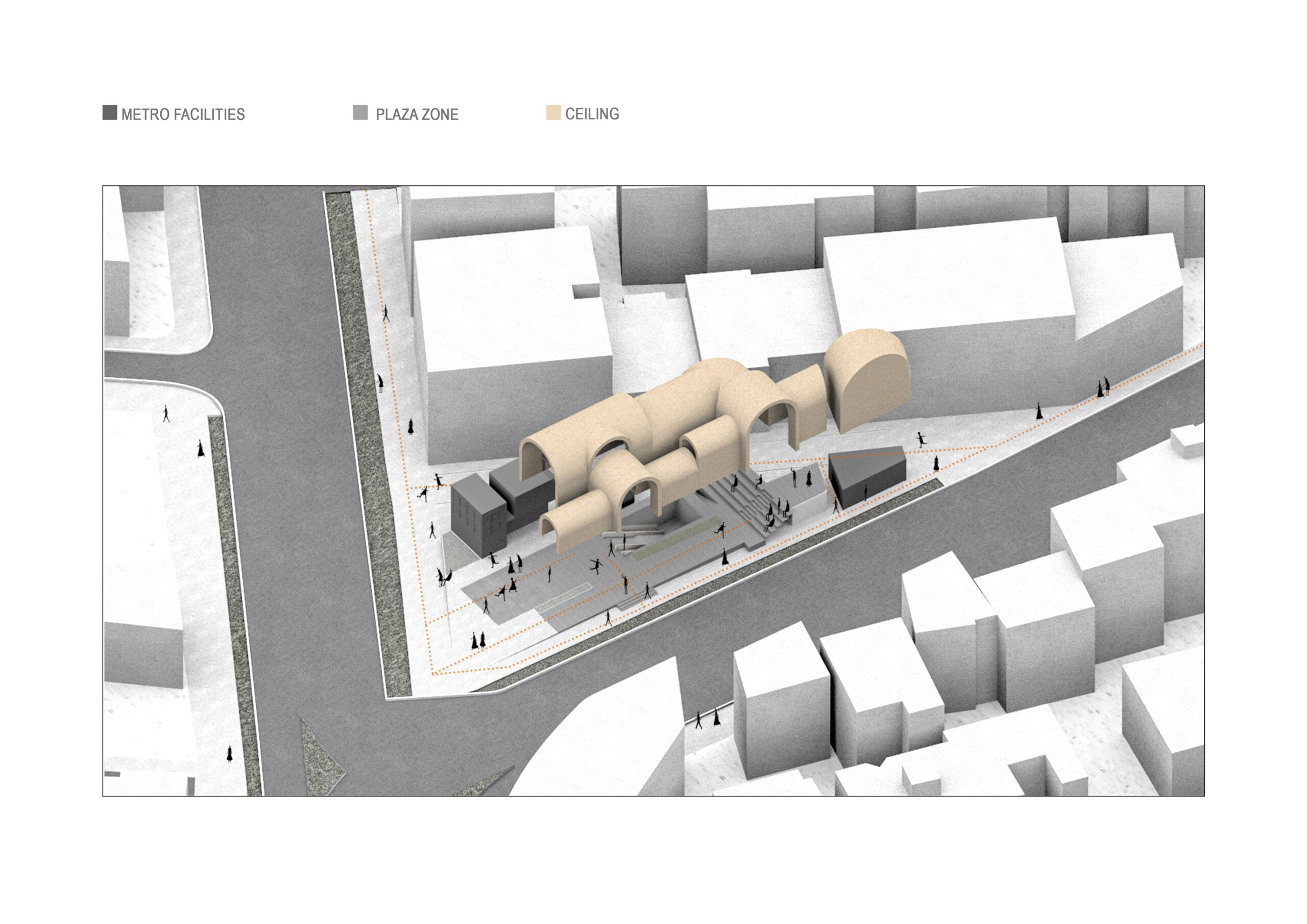
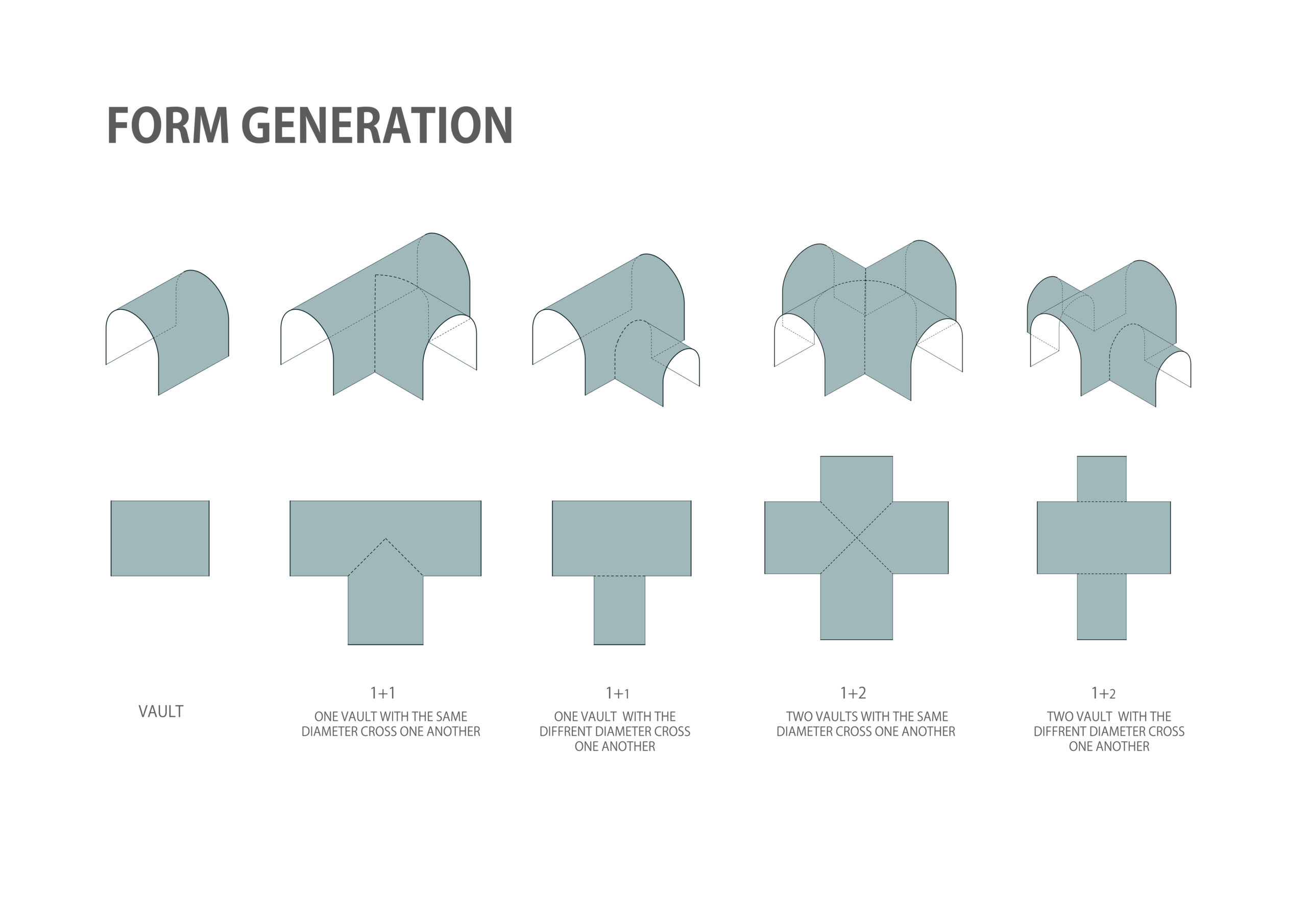
This project was an effort to transform the metro entrance from a mere entry point into an open platform defined by its users, with the aim of introducing a new perspective that would turn these spaces into flexible and dynamic city points. Furthermore, this initiative aligned with the larger “Pedestrian-Oriented City of Tehran” plan, aiming to reclaim and redefine underutilized spaces in the city, offering citizens accessible and adaptable urban environments.
Location Tehran, Iran
Competition 2023
Program Infrastructure, Metro Station entrance, Urban
Area 1000 sqm
Client Tehran Municipality
Office KA architecture studio (Mohammad Khavarian)
Lead Architect Mohammad Khavarian
Site Supervisor Mohammad Khavarian
Design Team Mehrasa Nikookar
Engineering & Consulting/Structural Mohammad Panahi
Engineering & Consulting/Lighting Meghdad Amiri
Engineering & Consulting/façade Behnood Gooharbin, Masoud Gooharbin
General Constructing Mehdi Firoozi
Photographs ©Mohammad Hassan Ettefagh, Athena Taleghani
Office Website/Social Media www.khavarianarchitects.com/@mohammadkhavarian @ka.arch.studio