
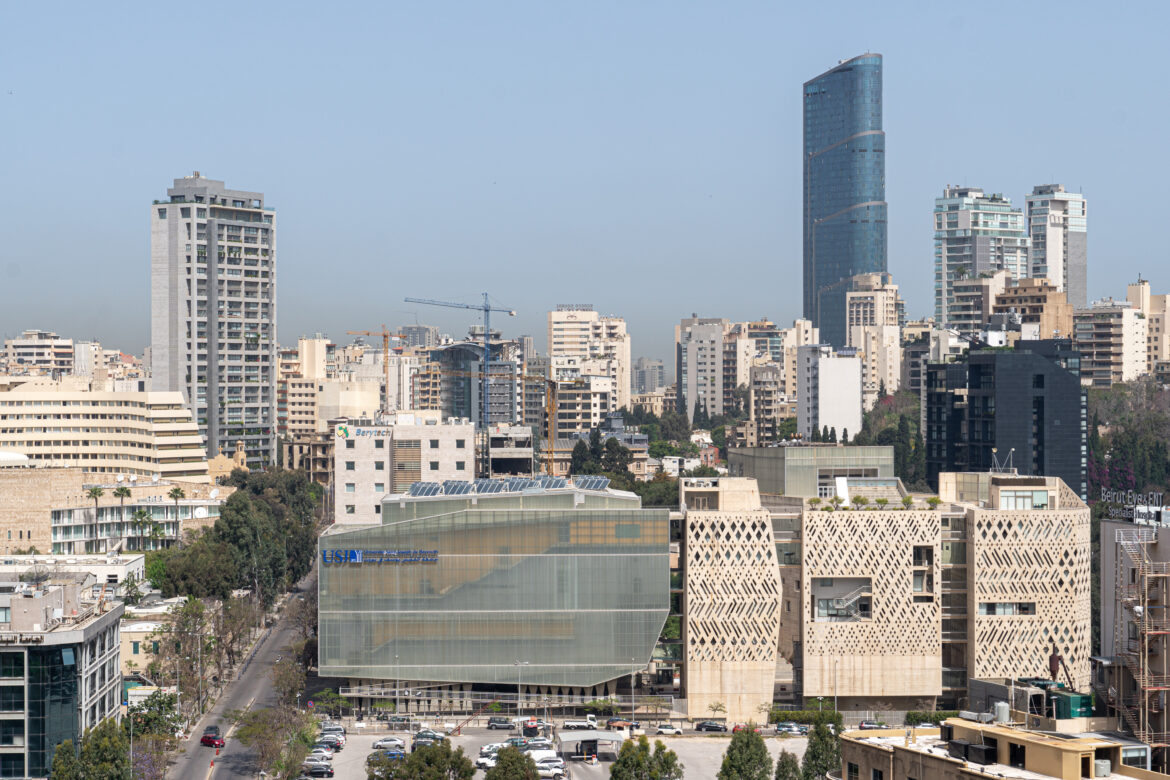
حرم جامعة سانت جوزيف للابتكار والرياضة
يوسف طومي
بيروت | لبنان
Project History
Beirut is a city of many cultures and religious communities that live together in close proximity. Throughout history, it has been a refuge for oppressed religious and ethnic groups and the politically persecuted, and one cannot help but be impressed by the sheer diversity of influences that colour the city. After the conflicts of the past, the hope is that the different denominations can find a new sense of cohesion and that Beirut could once again become a model for the entire region through its collective unity.
Some four kilometers south of the port where in August 2020 the terrible explosion of a depot occurred, causing extensive damage and suffering, lies the campus of the Catholic University of Saint Joseph (USJ) on Rue de Damas. This new building is the most important and by far the largest single building that Youssef Tohme has realized, with 109 Architects, in his career to date, and it has brought him international acclaim. It is also one of his first works as an architect in Lebanon after completing his studies and gaining professional experience in major architecture offices in France. Tohme’s design talent was recognized, and in 2004 he was invited to take on the significant task of co-designing the campus buildings for the University of Saint Joseph. Work was interrupted as the political situation in Lebanon deteriorated and armed conflict ensued, and Tohme was first able to continue working on the project in 2008 after another spell in France.
Project Concept
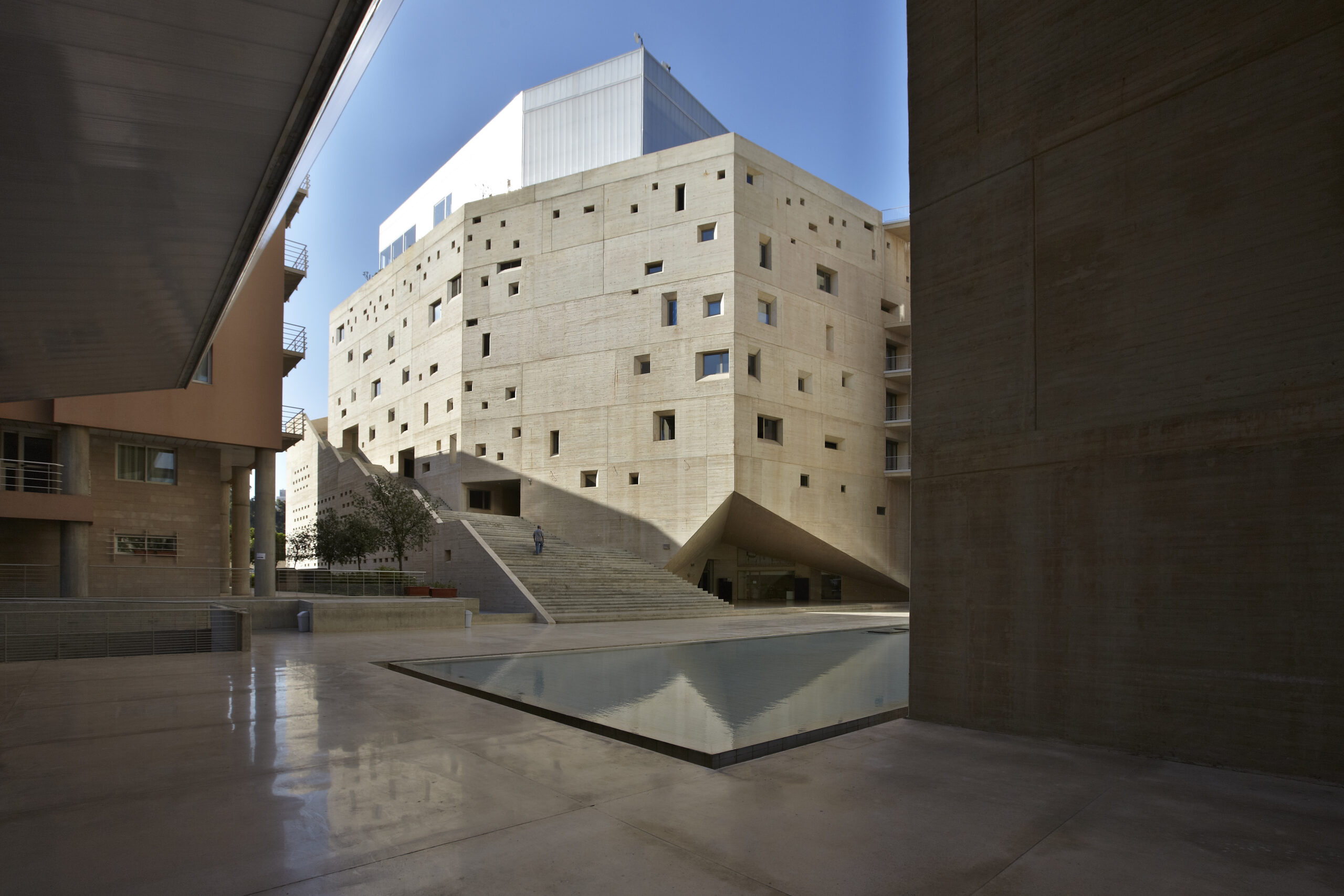
They began work on a bold concept that with its unusual internal organization and idiosyncratic Brutalist expression initially met with skepticism from the client. Eventually They won them over with a strategy of bringing the heterogeneity of the city into the project, extending the public space vertically, and finding a compact solution to the arrangement of the different uses in the lower levels, including four levels of underground parking.
Sixty thousand square meters of usable space are squeezed onto a plot footprint of only 6,000 square meters, which is utilized to the maximum. Situated in a quarter of the city where nothing of the old urban structure remains, the design of the campus conveys a sense of autonomous unity without appearing monolithic. Comprising several separate sections, the complex appears monumental and accessible at the same time, and it is this that constitutes its special fascination.
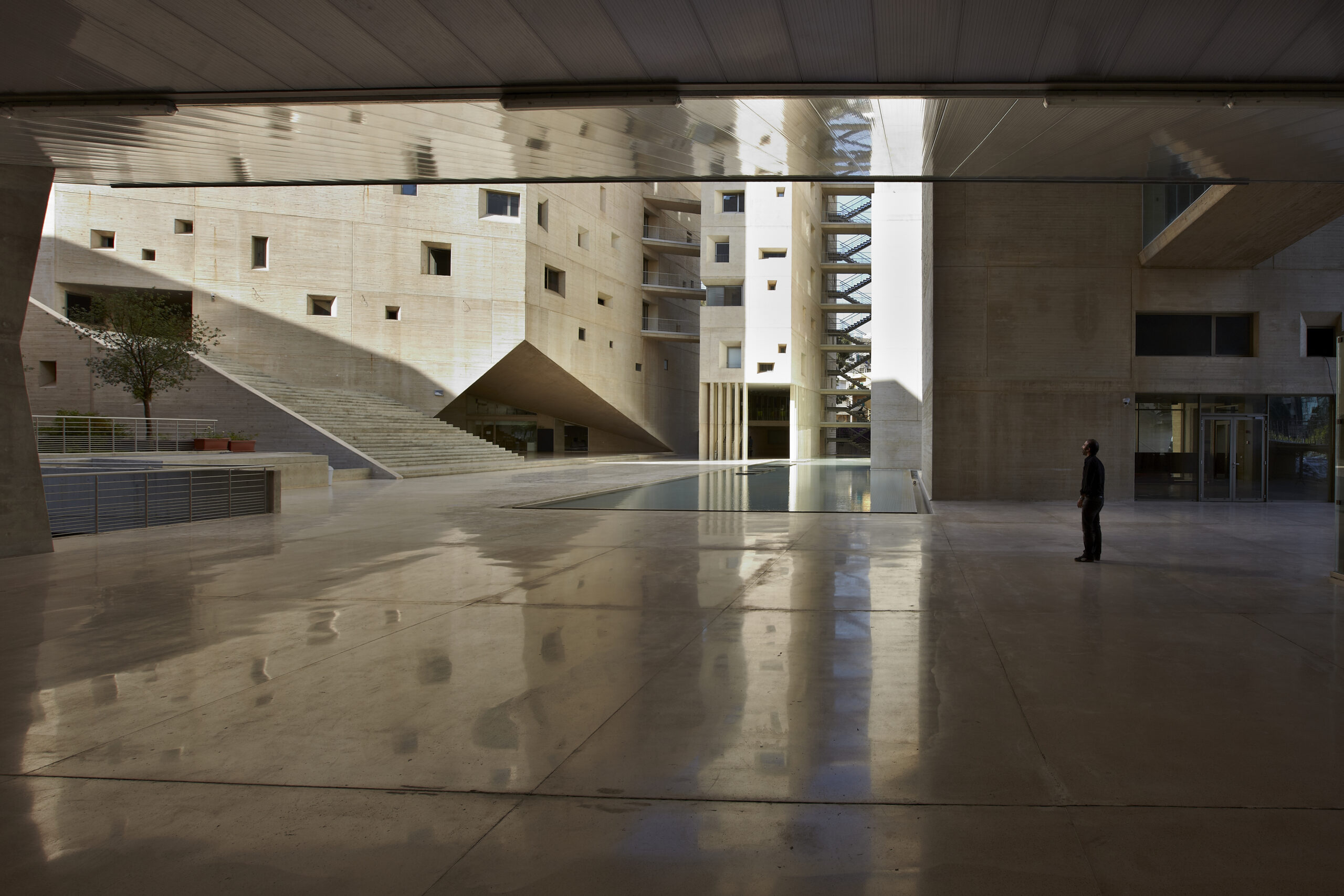
As Tohme remarks, it is the antithesis of a freestanding building. The programmed consists primarily of lecture halls, a large auditorium, administration facilities and a swimming pool and sports hall. The incorporation of public space into the building complex reveals the concerns of an architect intent on creating places of public urban interaction in a city that had effectively lost its public places as a result of the civil war. As Tohme says, “the empty space is a direct expression of freedom”.
Project Description
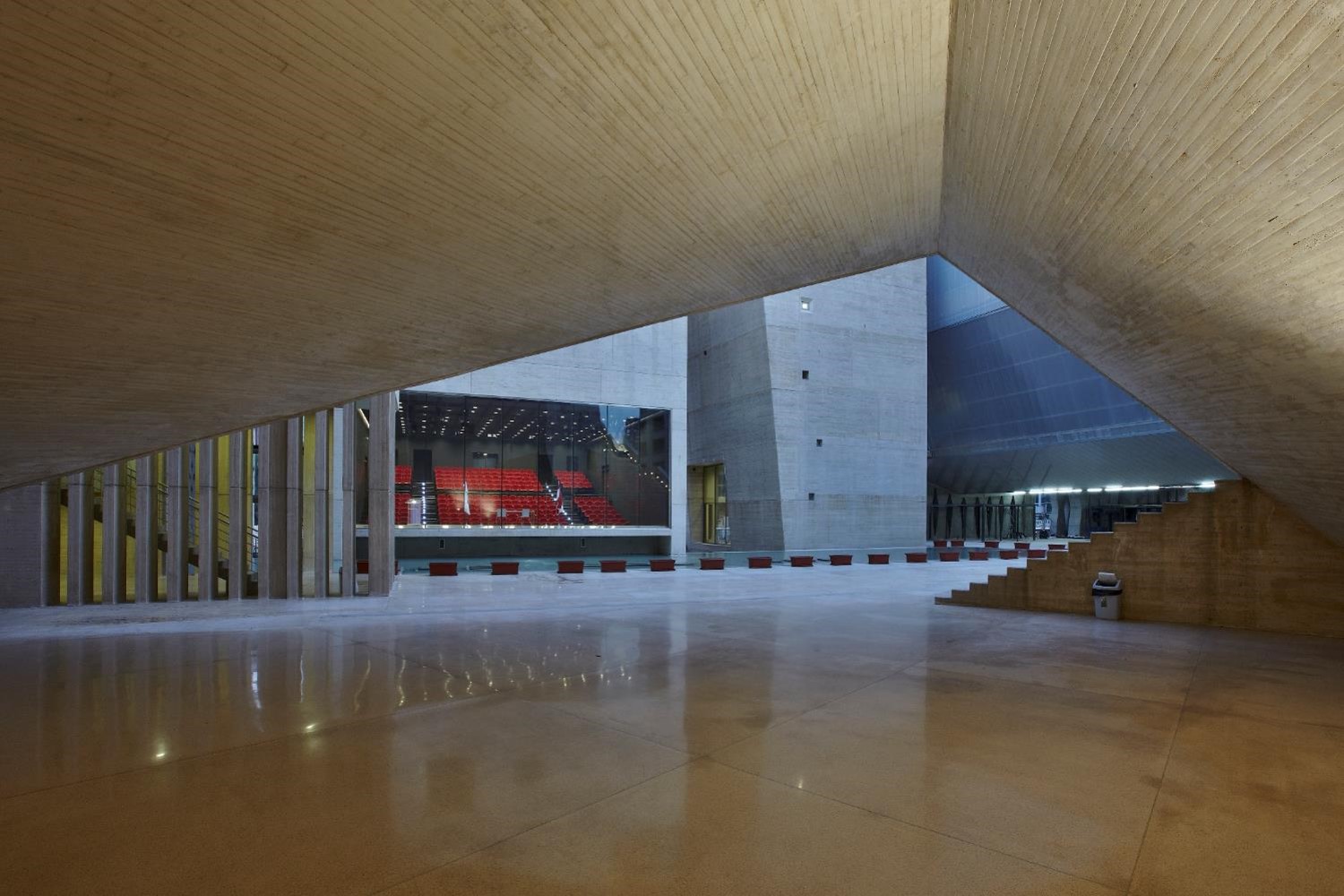
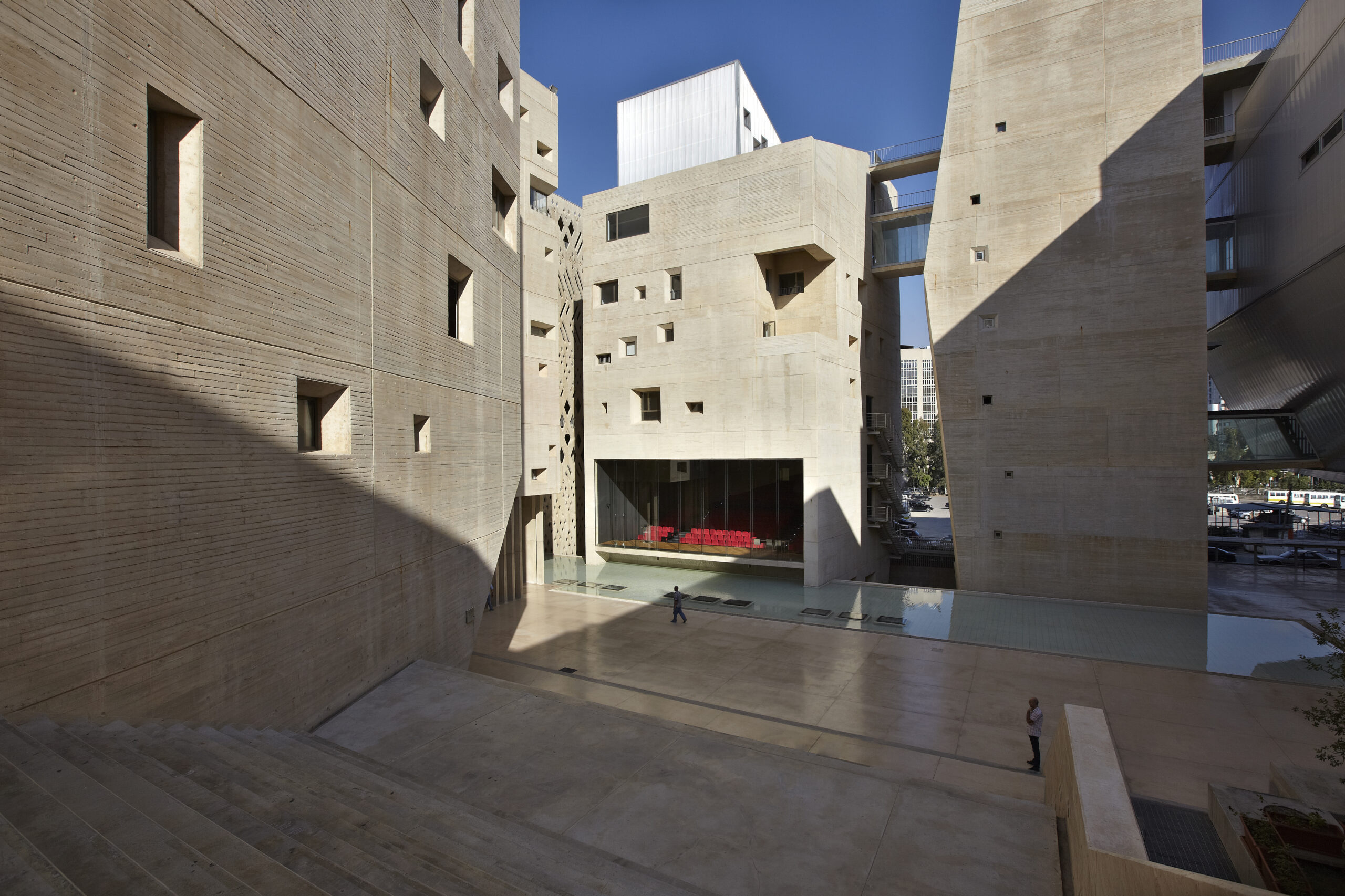
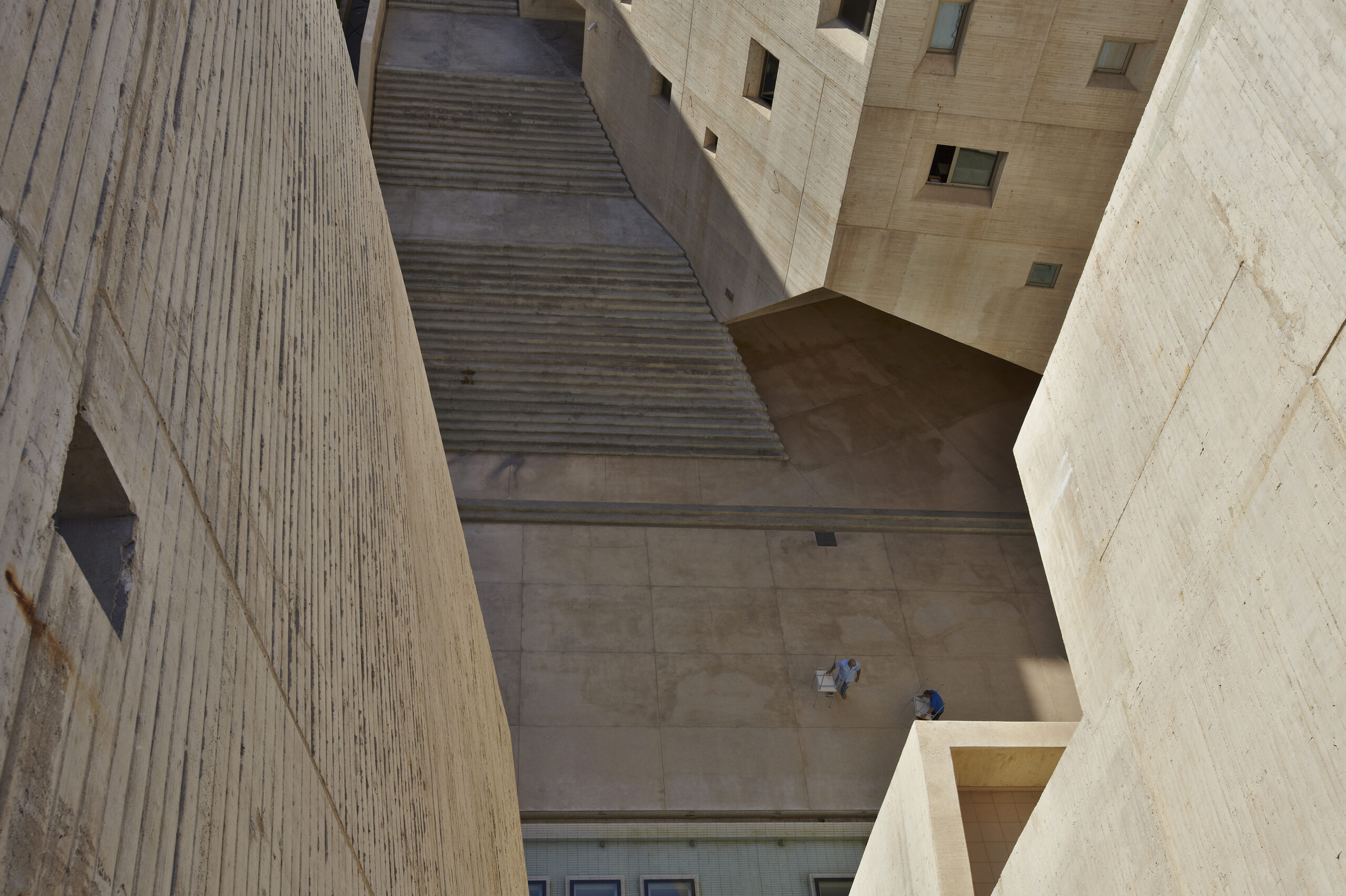
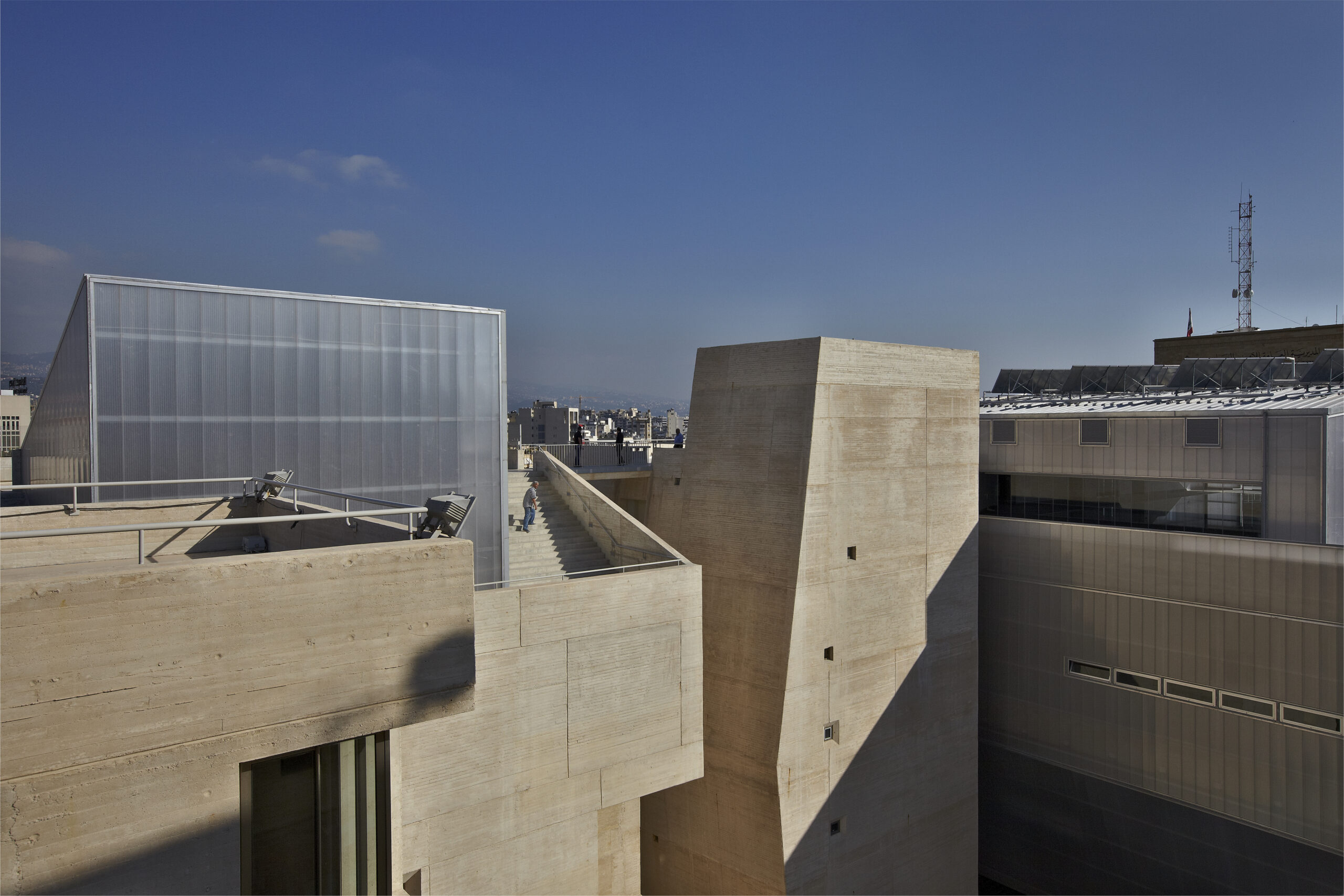
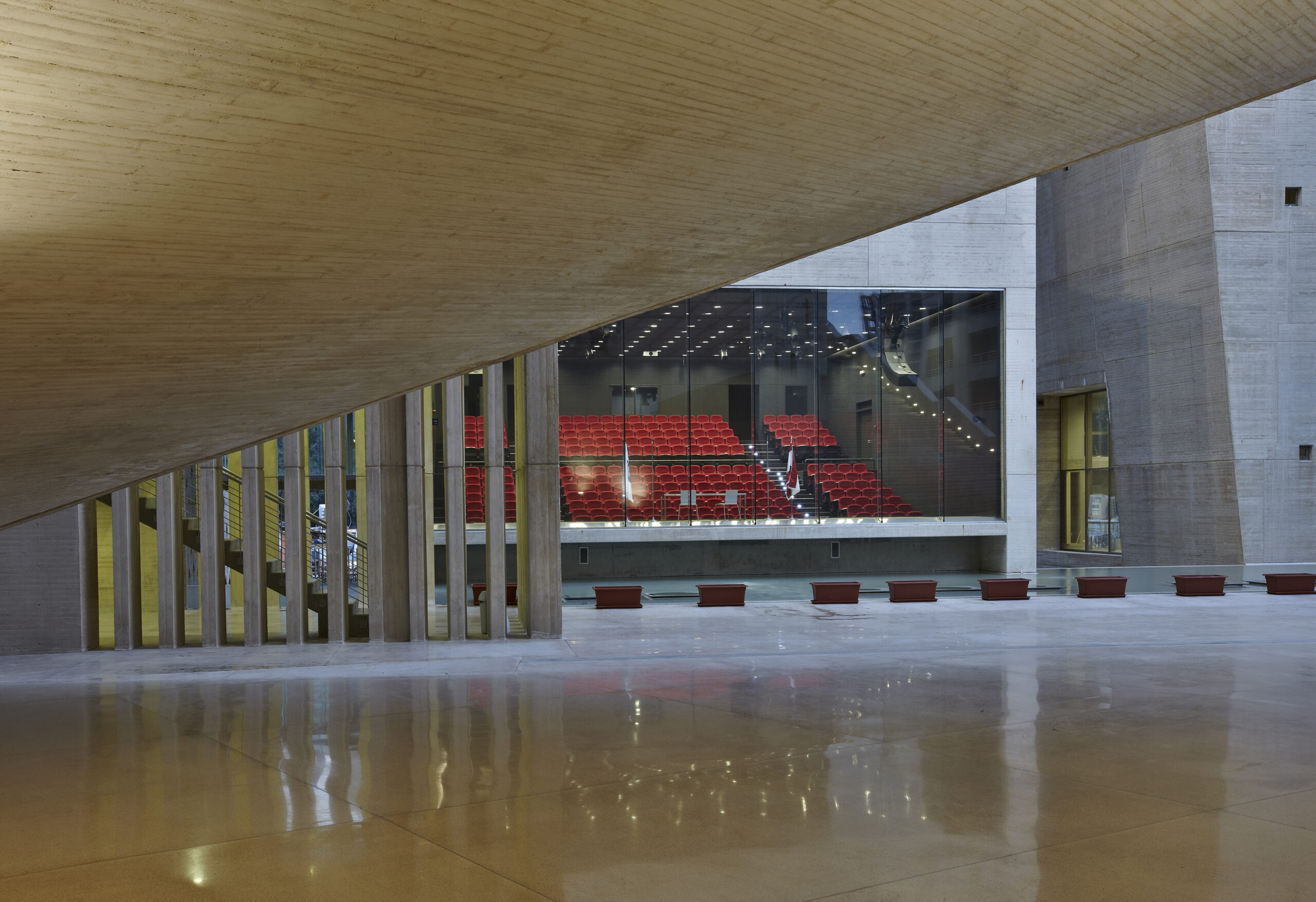
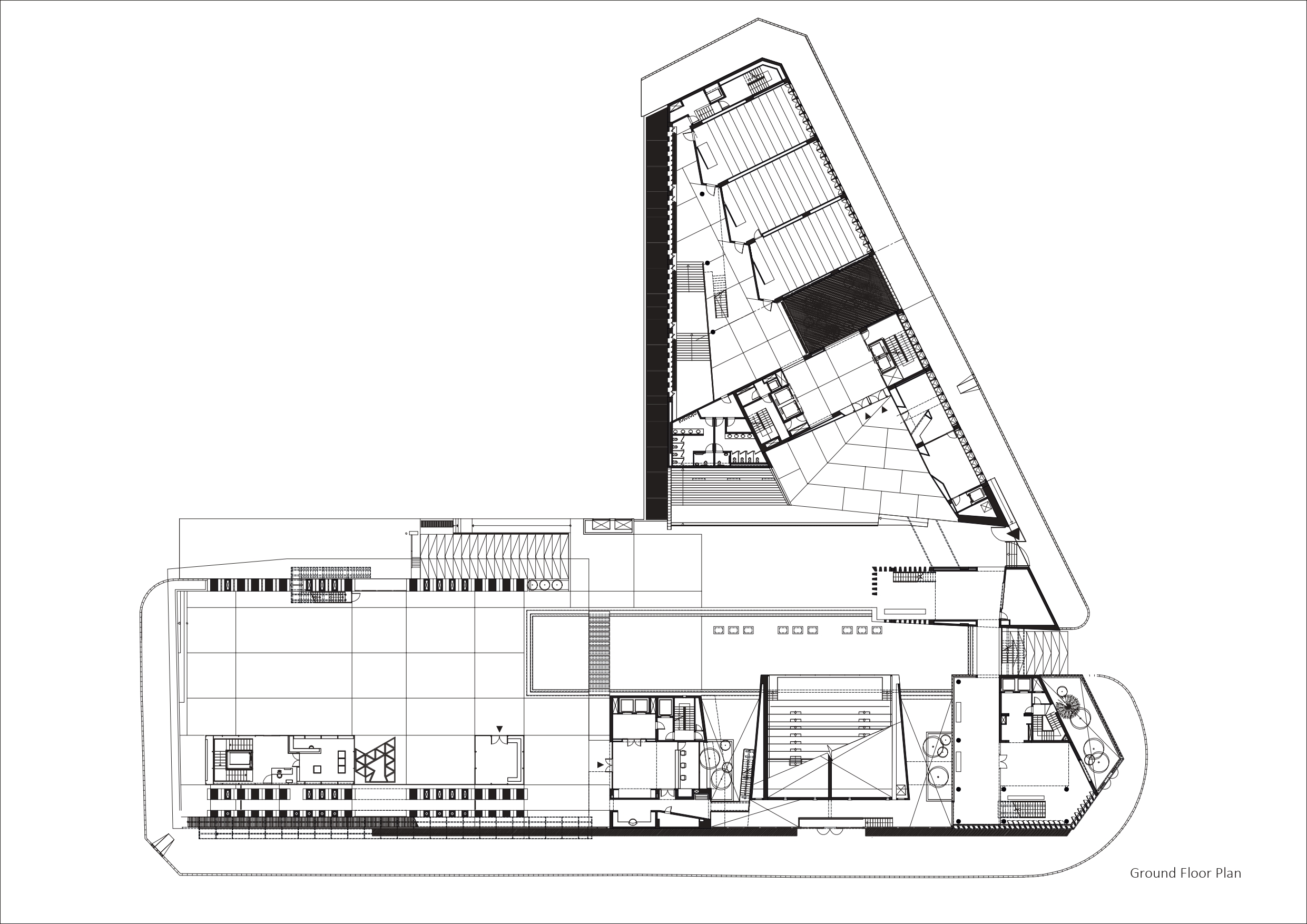
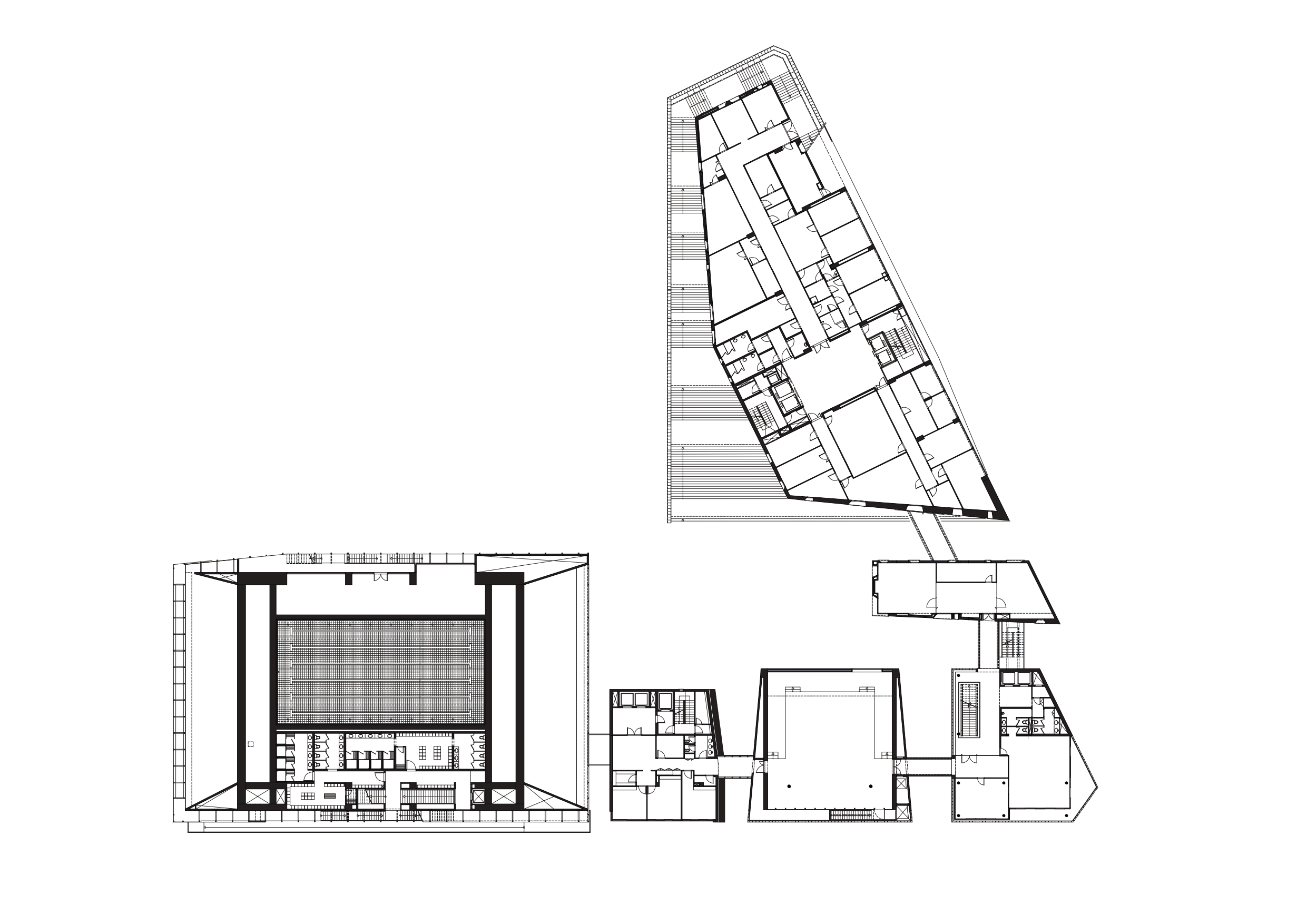
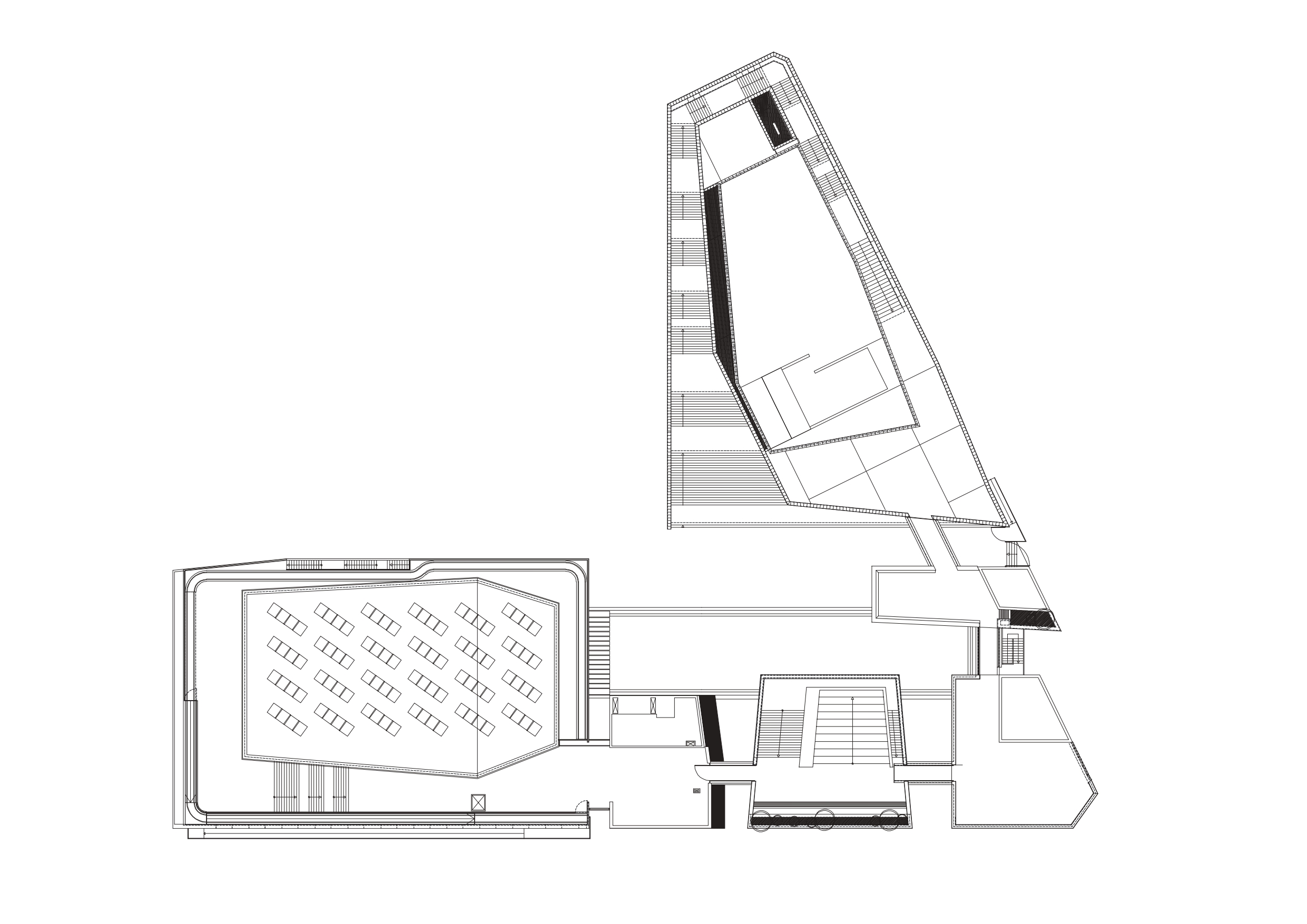
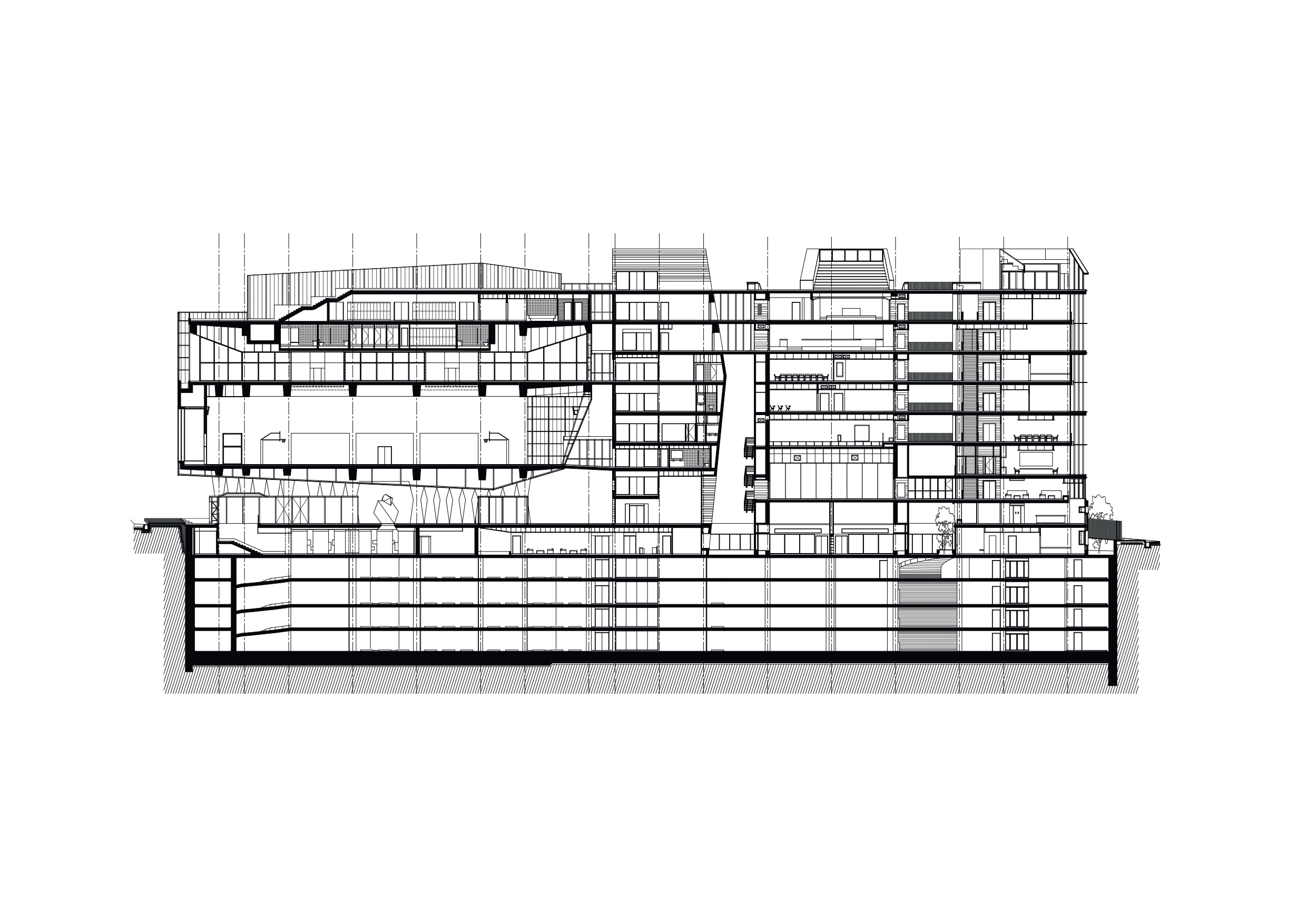
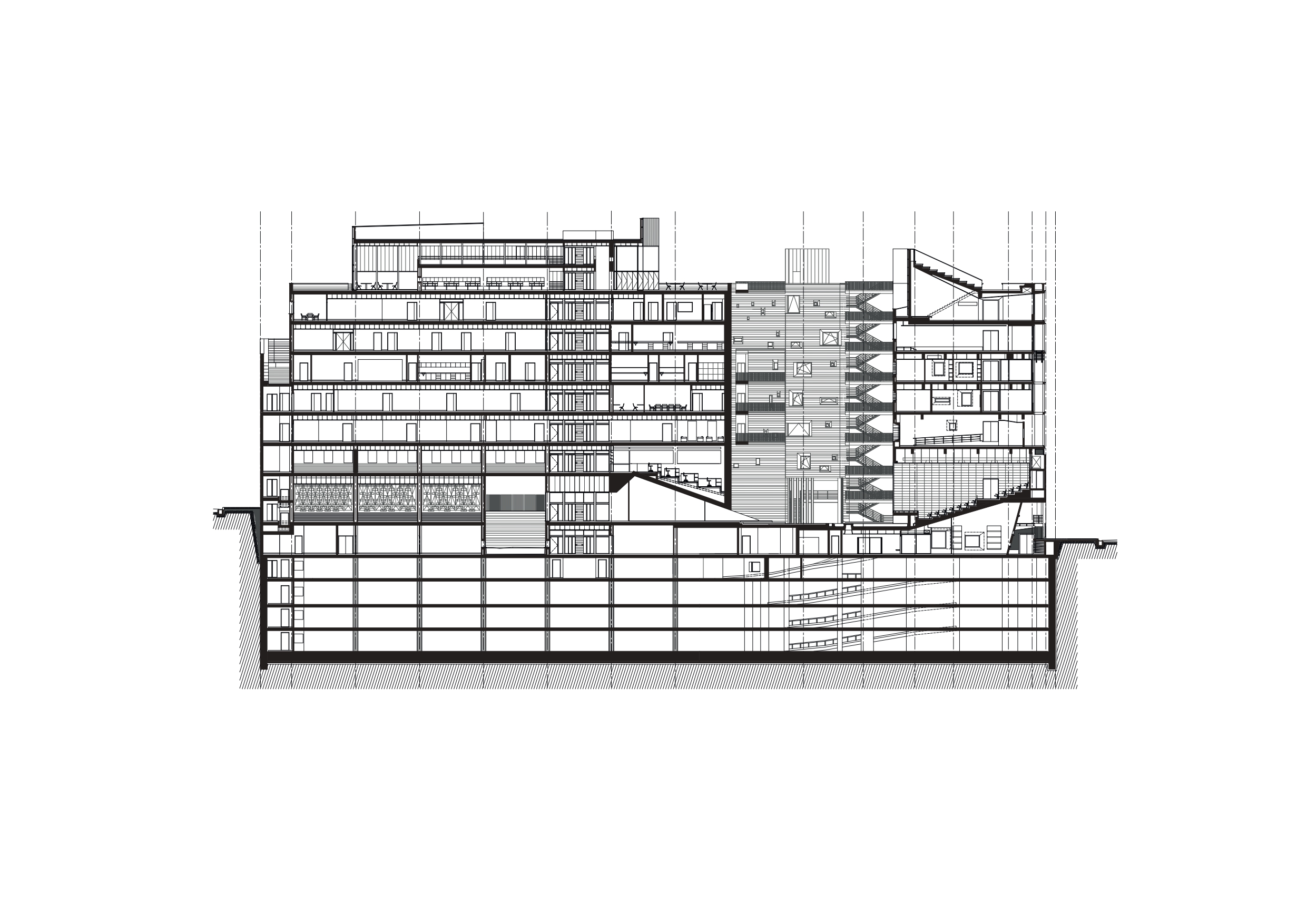
He placed a public space in the heart of the complex that in its form resembles an urban interior and through which he organizes access to and from the campus. One can look out in different directions onto the surrounding city. This central court flows upwards as a spatial continuum, extending up and along an exterior staircase wide enough for students to sit on. This in turn leads up to the roof terrace that provides spaces for both leisure activities and peace and tranquility, for example in the rooftop chapel. The importance the architects attach to this public space produces a highly unusual vertical organization in which the individual elements of the program are superimposed over one another. It is as if one had thoroughly shaken up what was once a monolithic block and then pulled it apart to form three parts, each of which is further divided into smaller units and interconnected via footbridges. The different spatial strands cross and connect, compete with one another, or overlap. From this a complex structure emerges.
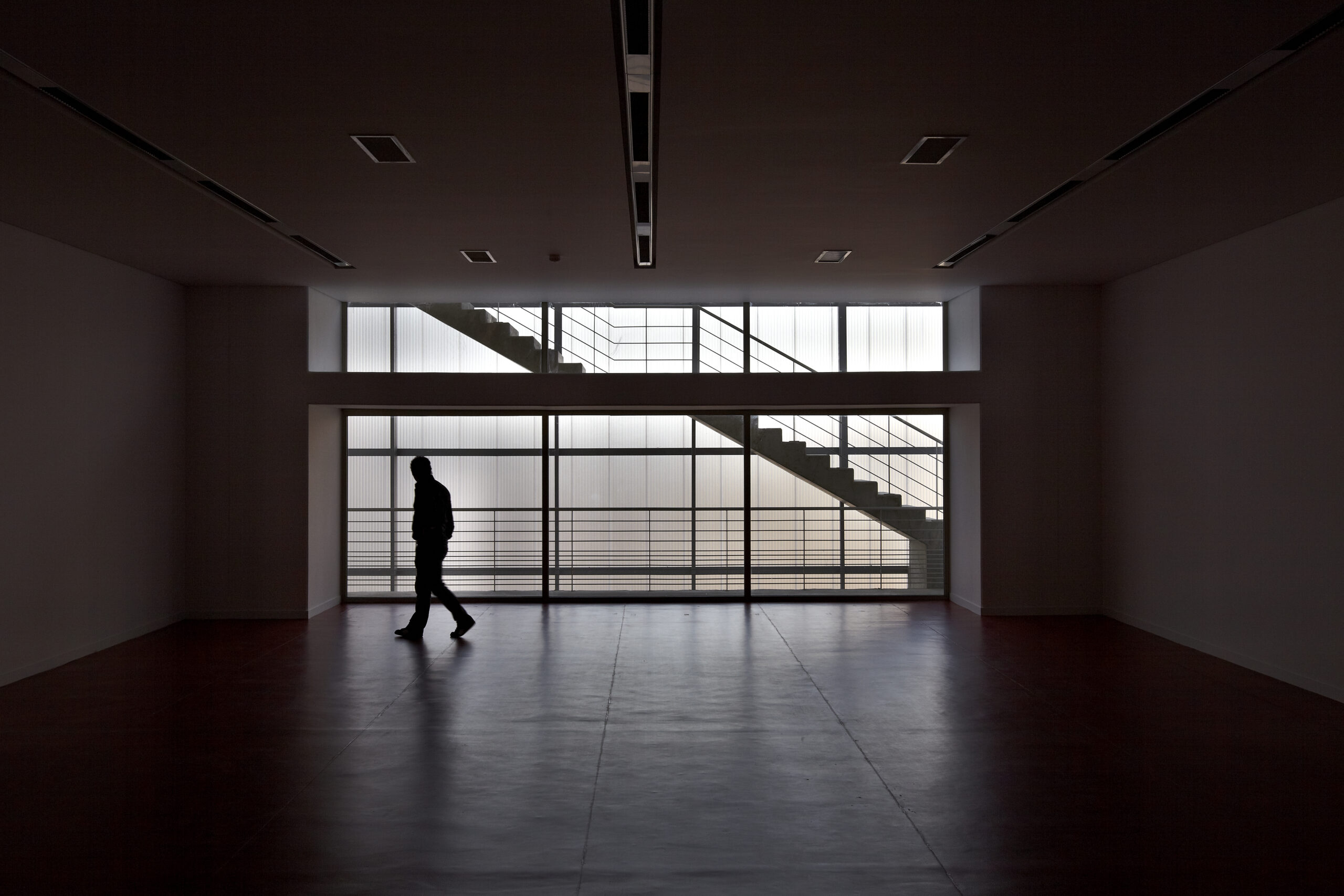
The first block, to the south, stands out from the others with its façade cladding of lightweight polycarbonate panels. It contains the sports facilities stacked one on top of the other: above an open space on the ground floor is the sports hall, a swimming pool and, on the roof, a basketball court. In the second block, above a large, glazed auditorium and a café on the ground floor, are a music hall and seminar rooms, and at the very top a chapel. On the ground floor of the third block is the main entrance foyer and infirmary, and an Amphitheatre-like lecture hall.
Above these are the library, more seminar rooms and a rooftop restaurant. This complex organizational structure follows a constructive logic that, with the exception of the grid in the lecture rooms, does not seem to follow a discernible pattern. It is almost as if the functional program has been inserted into a seemingly endless spatial form that might almost have already existed, and in which the uses have found a home. Precisely because the in-situ cast concrete exteriors of the separate volumes provide scant indication of what lies behind, one’s attention focuses on the flow of interlocking public space. Slit, pierced, and broken open in varying, often playful arrangements of openings, the up to 25-meter-high solid concrete walls resist customary interpretation. The dramatic composition of forms tests the limits of formwork and casting techniques, and the result is a testament to the skill and capabilities of the contractors.
The southeast front of the building is large and striking and divided into four building sections. Here the façades display a distinct language of their own. With the exception of two large “shop windows”, the openings are scattered across the façade with an apparent randomness that recalls the impact of missile strikes. While no doubt an intentional gesture, it comes close to aestheticizing the horrors of war, but the overall effect is certainly visually compelling. The color of the exposed concrete is not consistent throughout, tending towards pink in some places. As Tohme explains, the quarry supplying the white sand ceased operations during the construction and the sand subsequently imported from Cyprus had a significantly more reddish pigment. This reflects the constant unpredictability that is an economic reality in Lebanon. As such, this university building is highly symbolic of its surrounding context at multiple levels.
Project Drawings
Location Beirut, Lebanon
Competition 2005-2011
Program Educational
Area 55,000 sqm
Client Université Saint-Joseph (USJ)
Office Youssef Tohme Architects and Associates in collaboration with 109 Architects
Lead Architect Nada Assaf (109 Architects)
Partner Michel Georr & Ibrahim Berberi (109 Architects)
Team Rani Boustani, Etienne Nassar, Emile Khayat, Naja Chidiac, Richard Kassab (109 Architects)
Structural Consultant B.E.T. Rodolphe Mattar
Mechanical Consultant Ibrahim Mounayar
Electrical Consultant Georges Chamoun
Control Bureau Apave
Photographs © Albert Saikaly, Roland Ragi
Office Website https://ytaa.co
Social Media @Youssef Tohme Architects and Associates