
مسابقة مدينة رام الله للعلوم والتكنولوجيا
Atelier of spatial matters
رام الله | فلسطين
the competition
Ramallah Science and Technology City (R.S.T.C), located in Ramallah city, will offer an interactive learning space year-round with activities and programs that target the entire community of all ages. It will be the one place the entire family can come and enjoy their time while learning and experiencing science informally. It will also be a hub for educational school trips, and the hub for science festivals and community activities.
Additionally, it will serve as a research and training centre for science educators locally and regionally. It will offer a holistic, inclusive informal educational scientific experience to all members of society.
Visits to the Science City will be conducted in organized groups from institutions, schools, universities, and the general public. Individuals and families can also visit individually. Ramallah City for Science and Technology will be a landmark tourist destination in the city, attracting visitors from all Palestinian cities and tourists from around the world visiting Palestine.
This unique project is first of its kind in the area and is a collaborative effort between Al Nayzak Organization and Ramallah Municipality.
The Science of Curiosity
All architecture is an act of optimism, but it is especially true for the new Ramallah Science & Technology City. The RSTC envisions a society where people are curious about science and the ways it can uplift our lives.
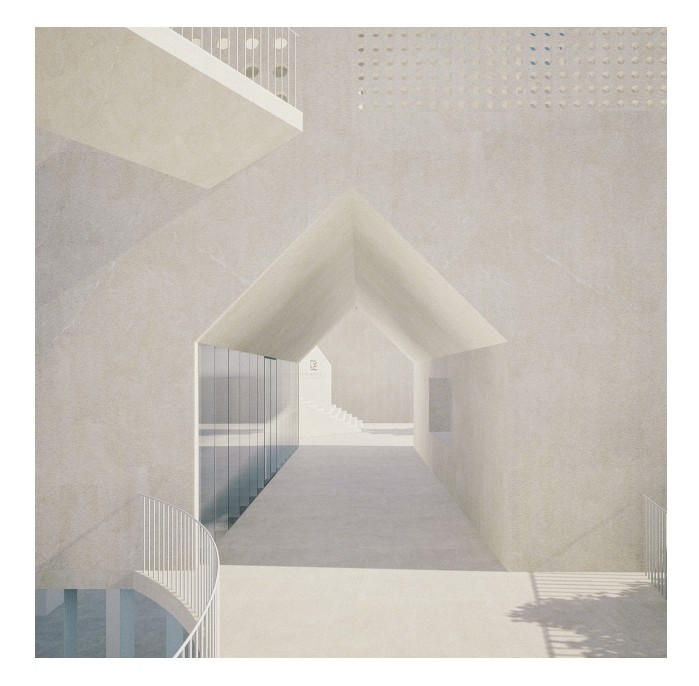
Our proposal is conceived with the same optimism, by setting out to inspire curiosity with an inviting-architecture. It encourages exploration, offering an ensemble of indoor and outdoor spaces to be discovered and enjoyed. It is a collection of spaces in the city for learning, introspection, gathering, and rest. Some of these spaces are immediate and spacious, others more hidden and intimate—but they are always open. This repertoire of spaces compels visitors to search for their own favorite spot. It is an architecture that reveals something new each visit in tandem with the changing exhibits and happing.
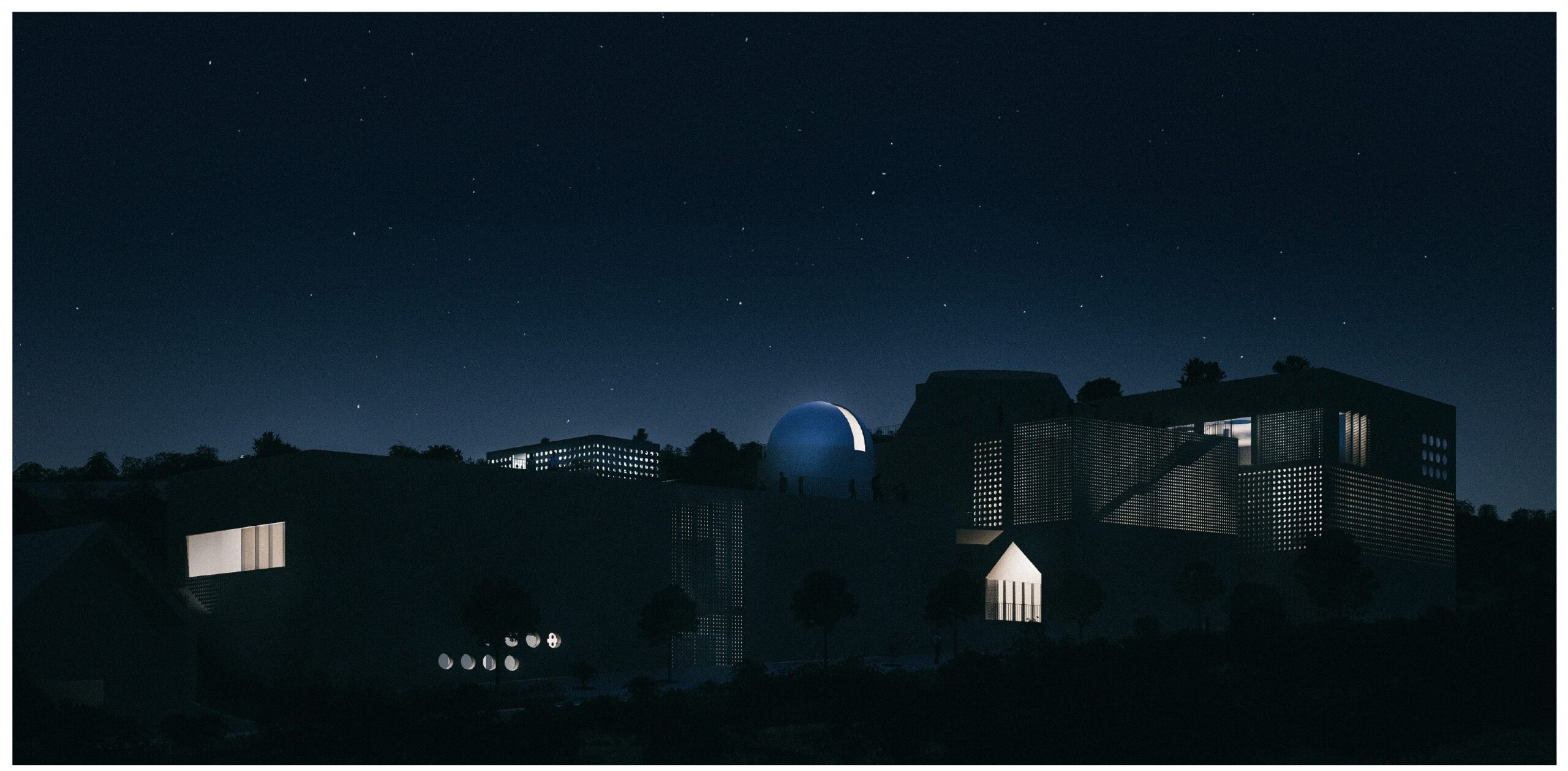
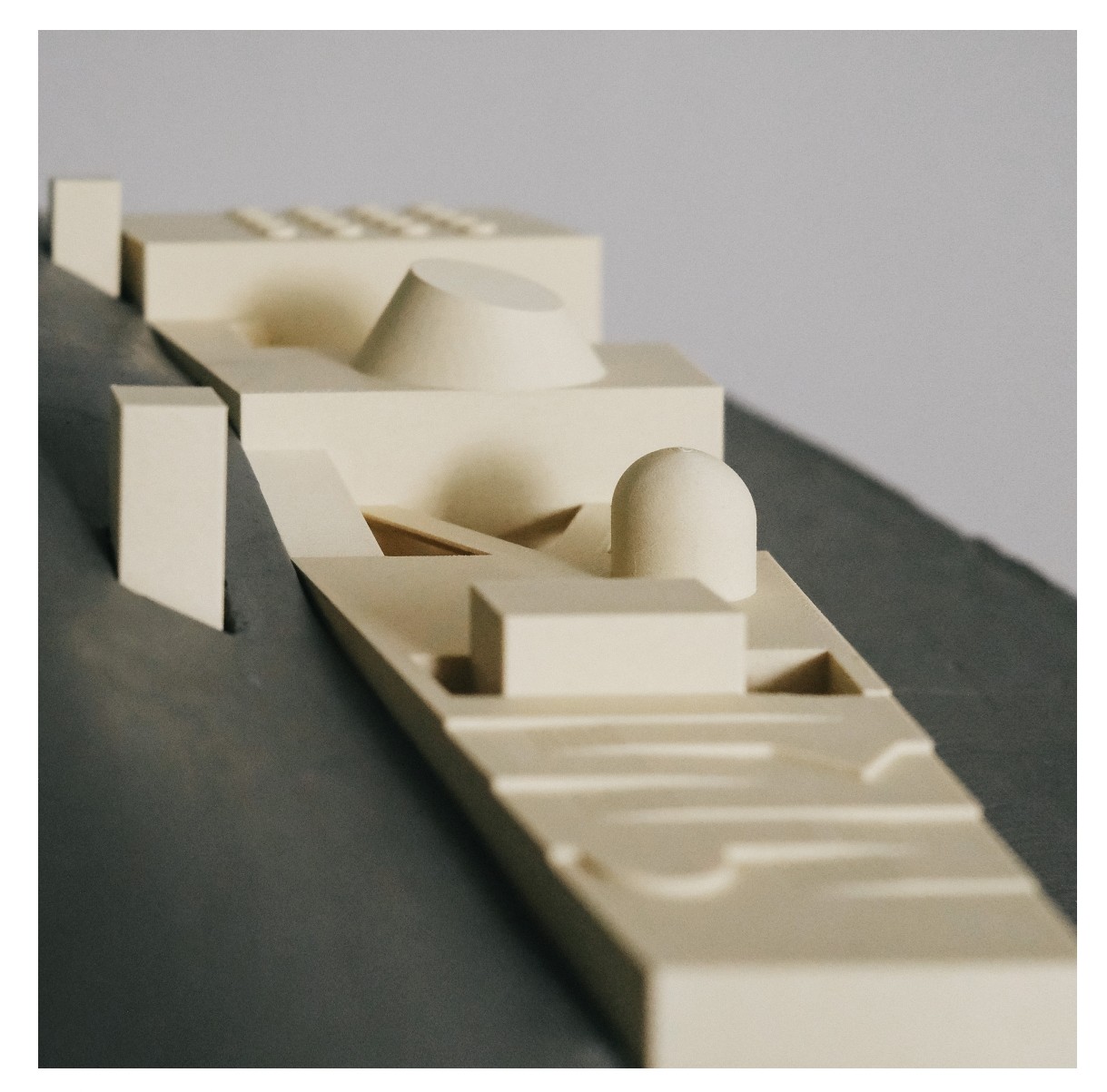
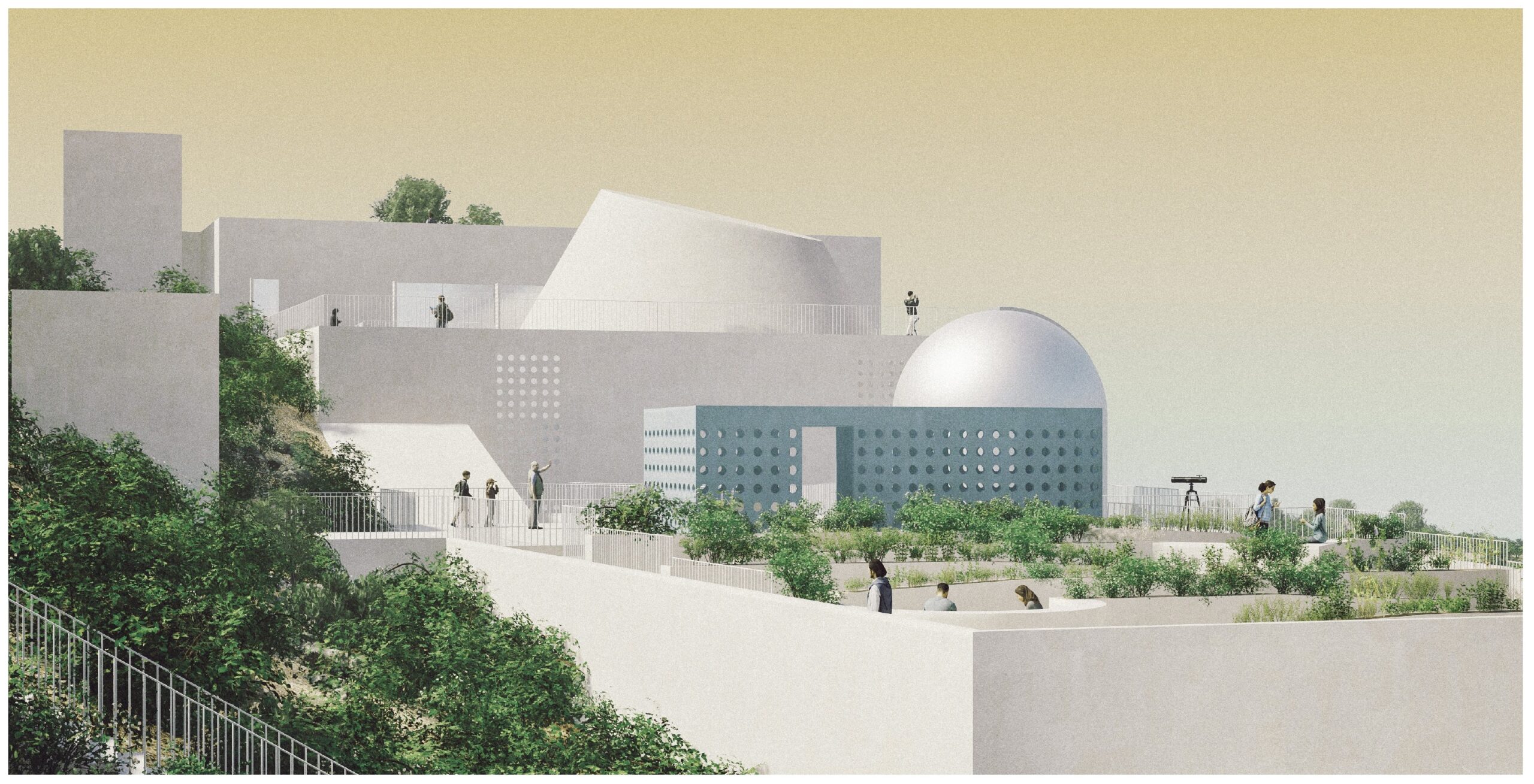
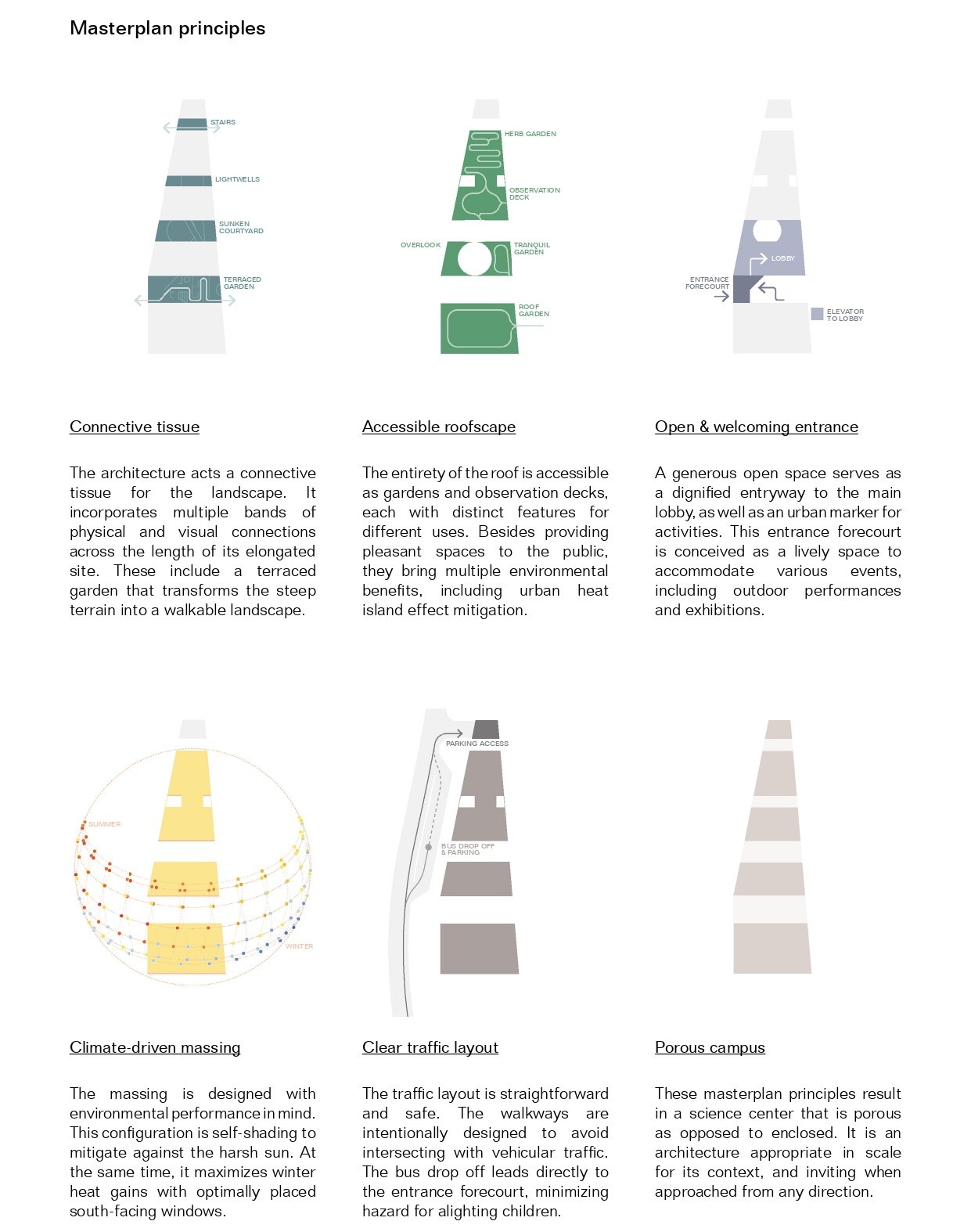
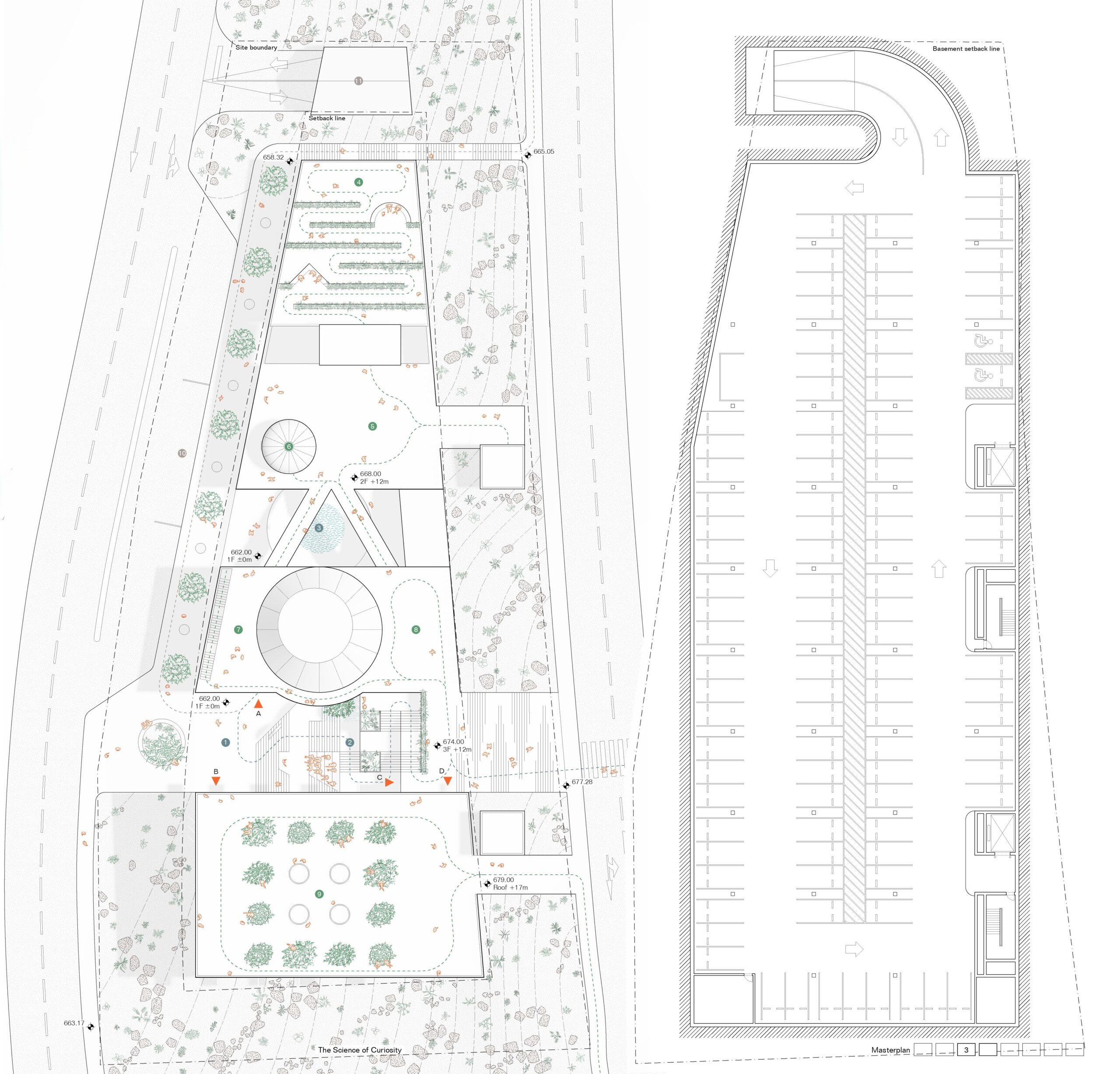
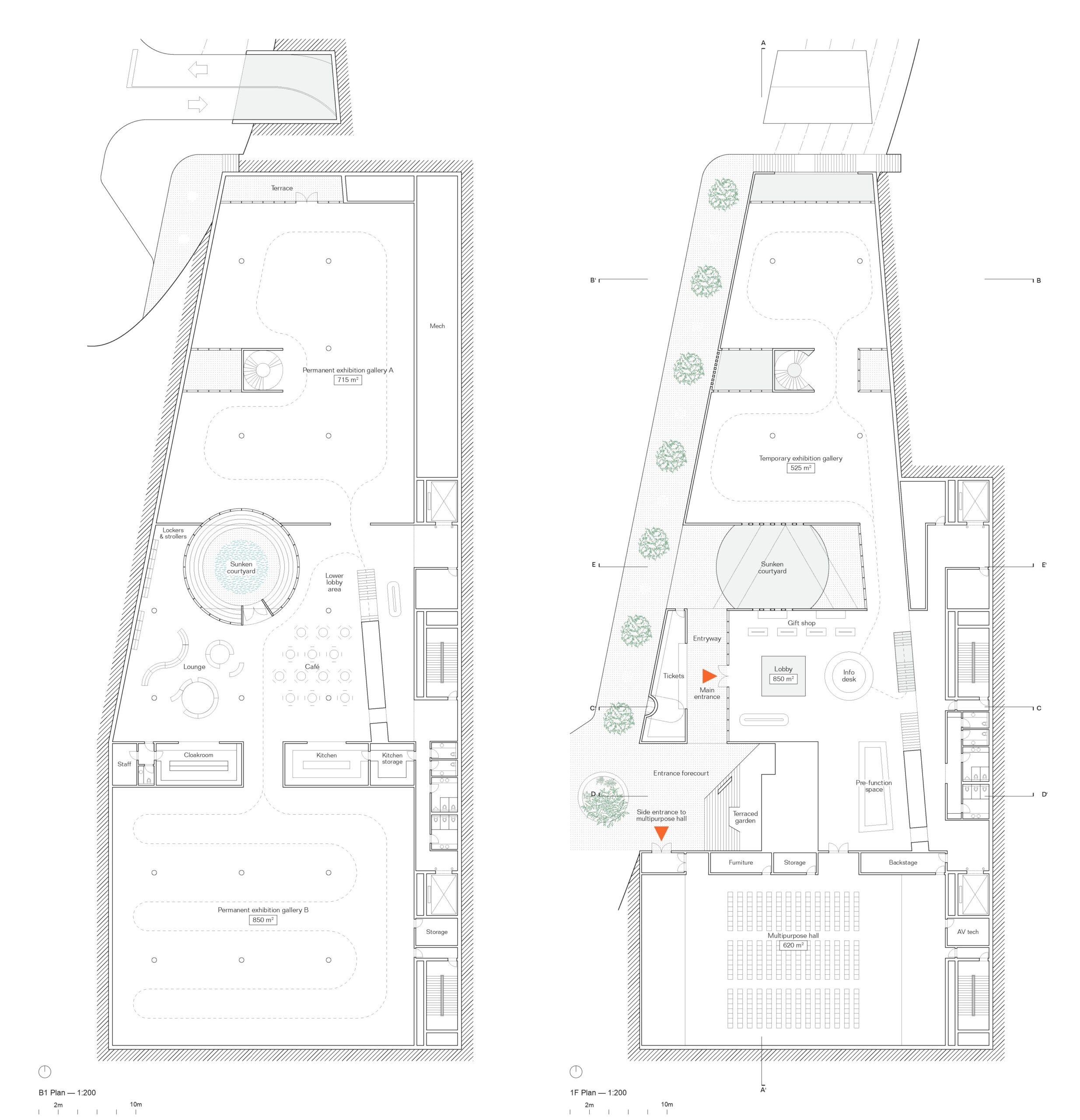
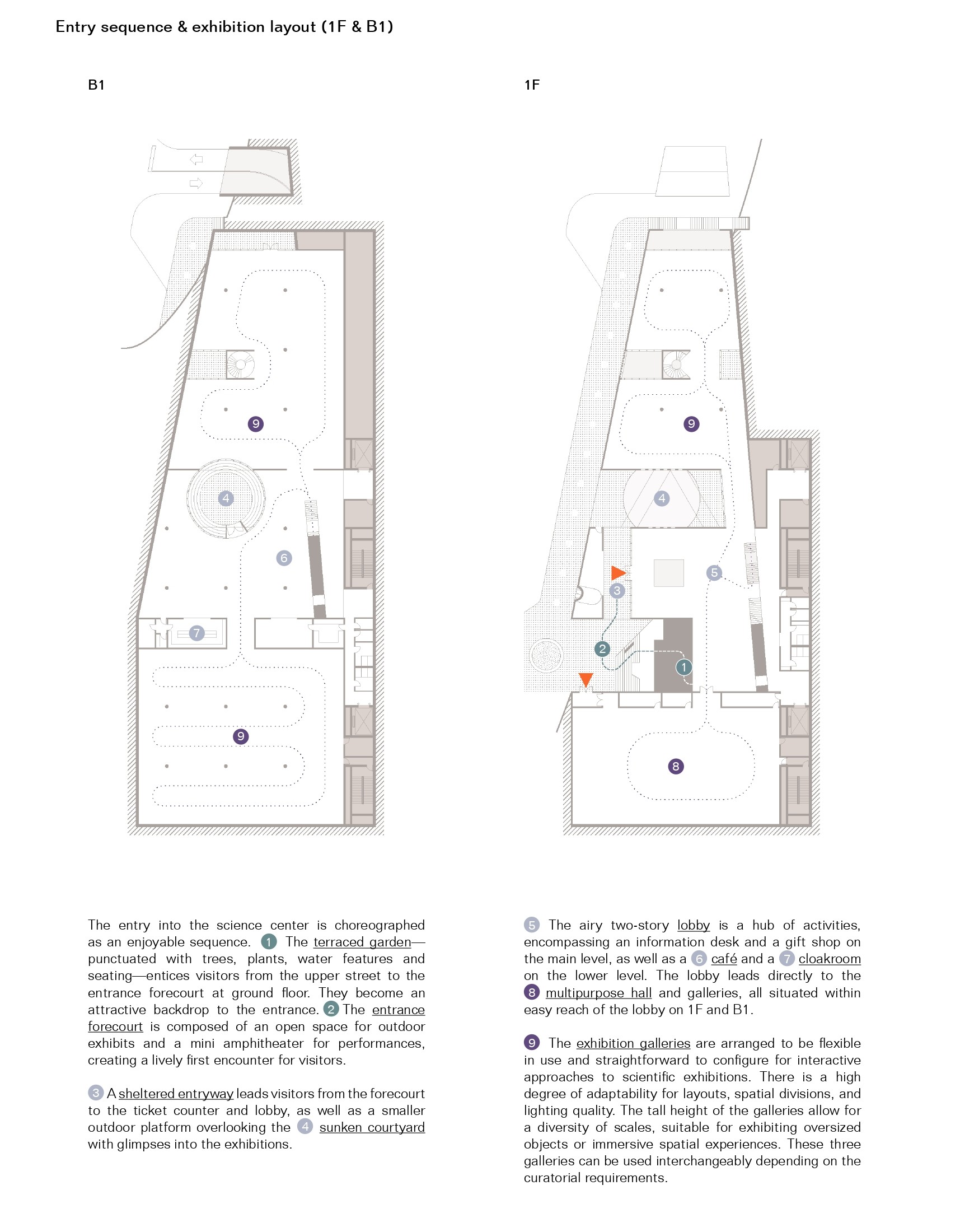
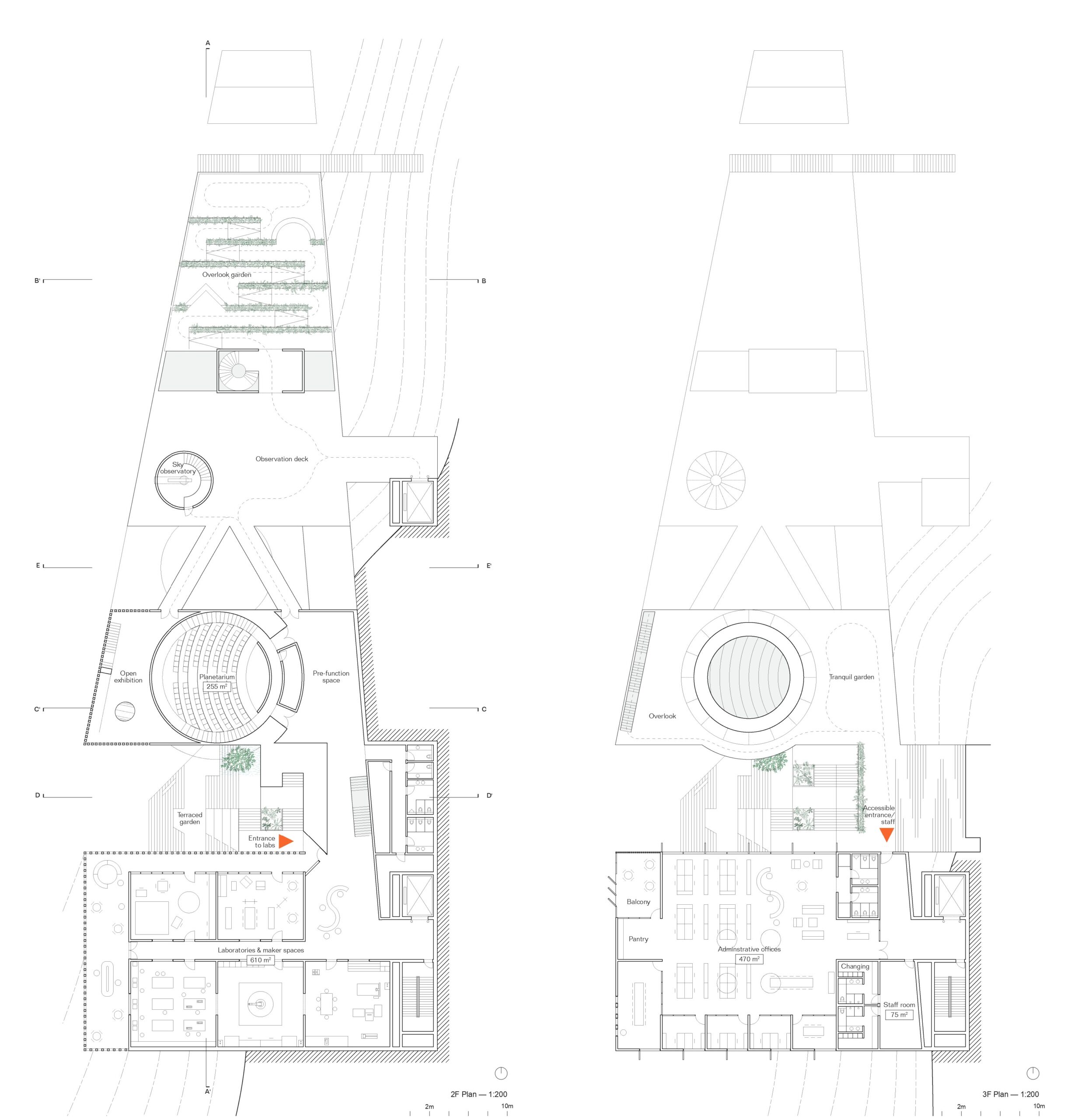
The architecture acts as a connective tissue that binds the science center to its surroundings. It draws on the topography to introduce engaging moments of intersection and traversal within the center and around the site. These moments include a generous terraced garden that negotiates the steep terrain and serves as an entrance marker. The roof is accessible as roof gardens and observation decks, with compelling views towards the sky and surroundings. An entrance forecourt, generous and open, serves as a dignified entryway to the main lobby as well as a site for activities and gathering.
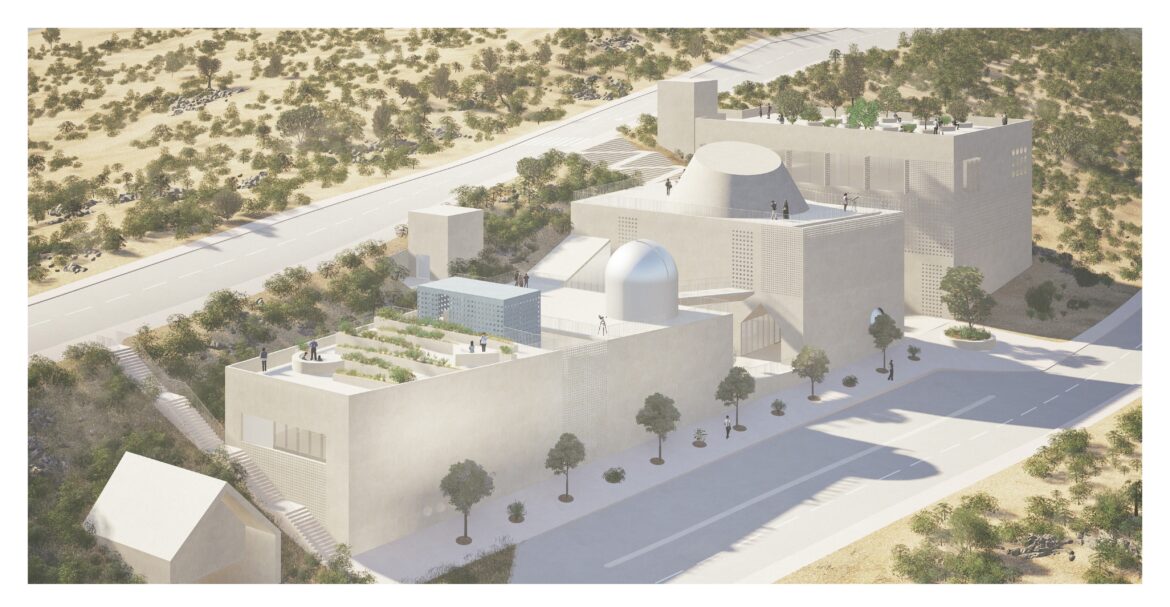
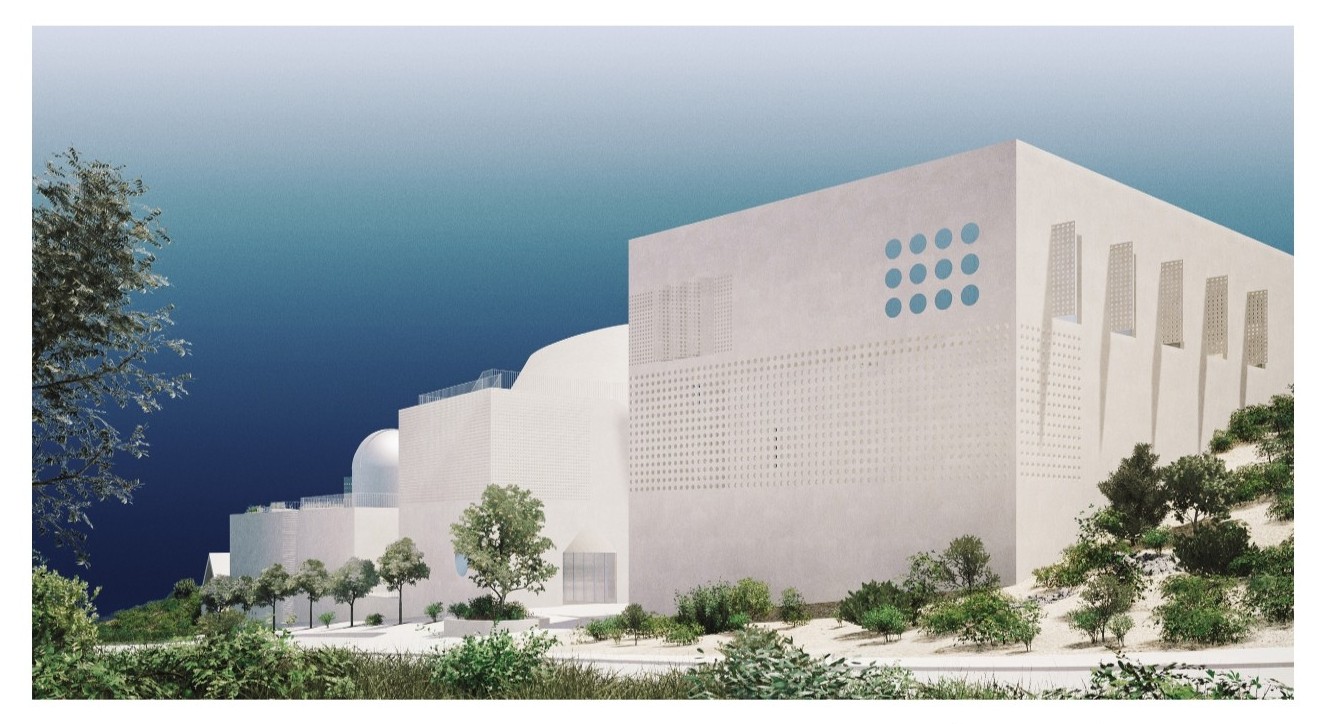
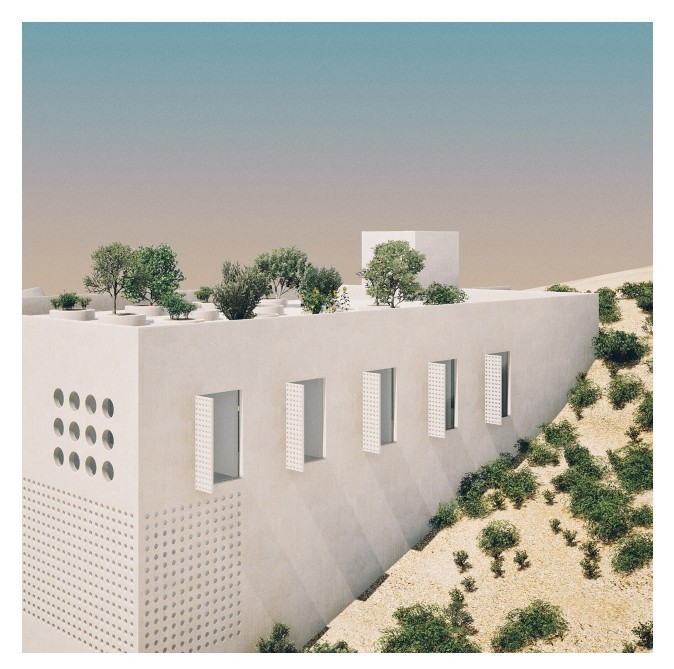
The overall massing adopts a welcoming scale. Its interior circulation and services are embedded within the height of the sloping landscape, with four seemingly discrete volumes of different sizes emerging above ground. This configuration allows the landscape to connect between the volumes, breaking down an otherwise imposing length into a porous condition, engaging the neighbourhood in all directions.
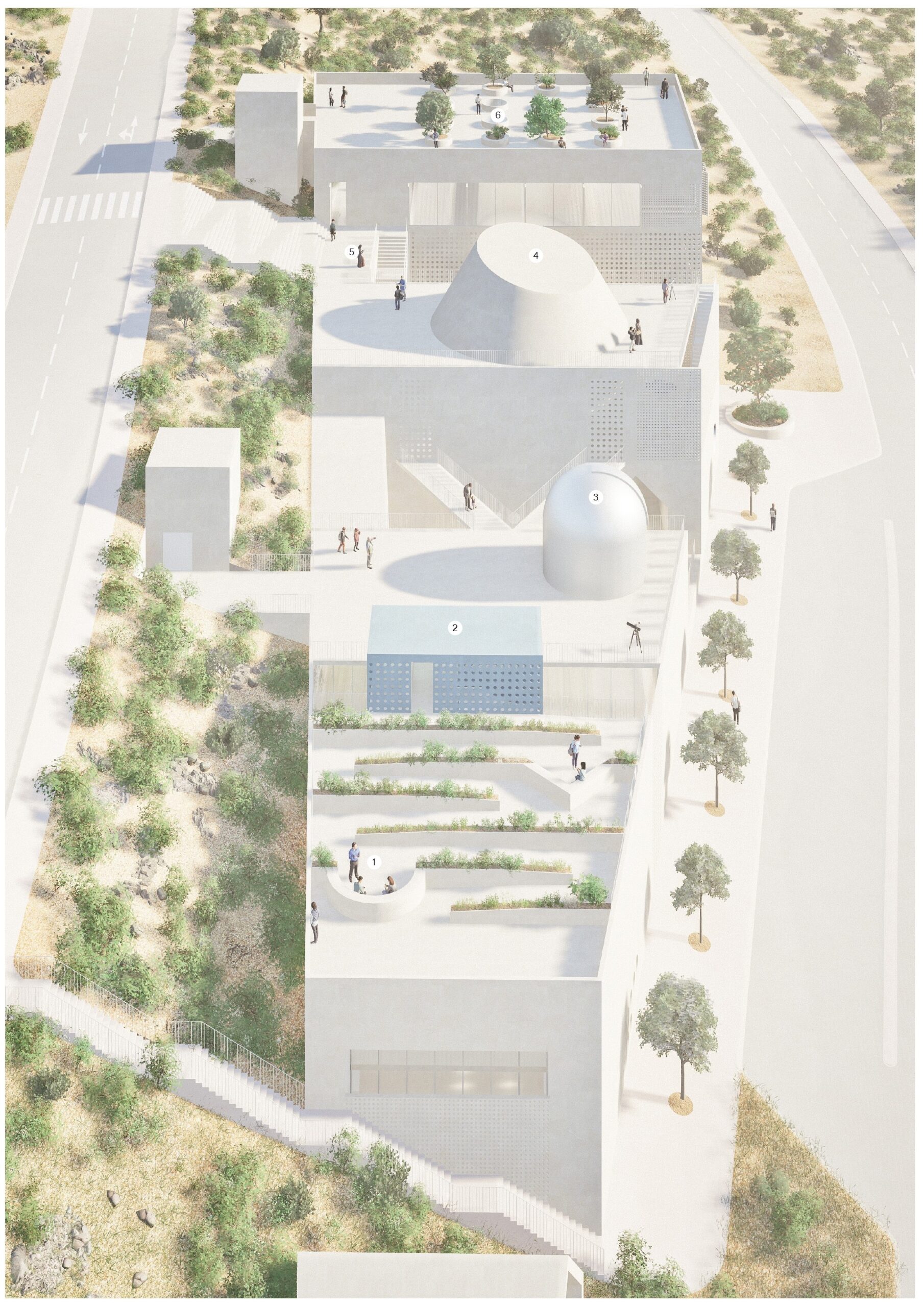
Expressive elements on the roof, reminiscent of manateer, announce the diversity of the programs within the science center.
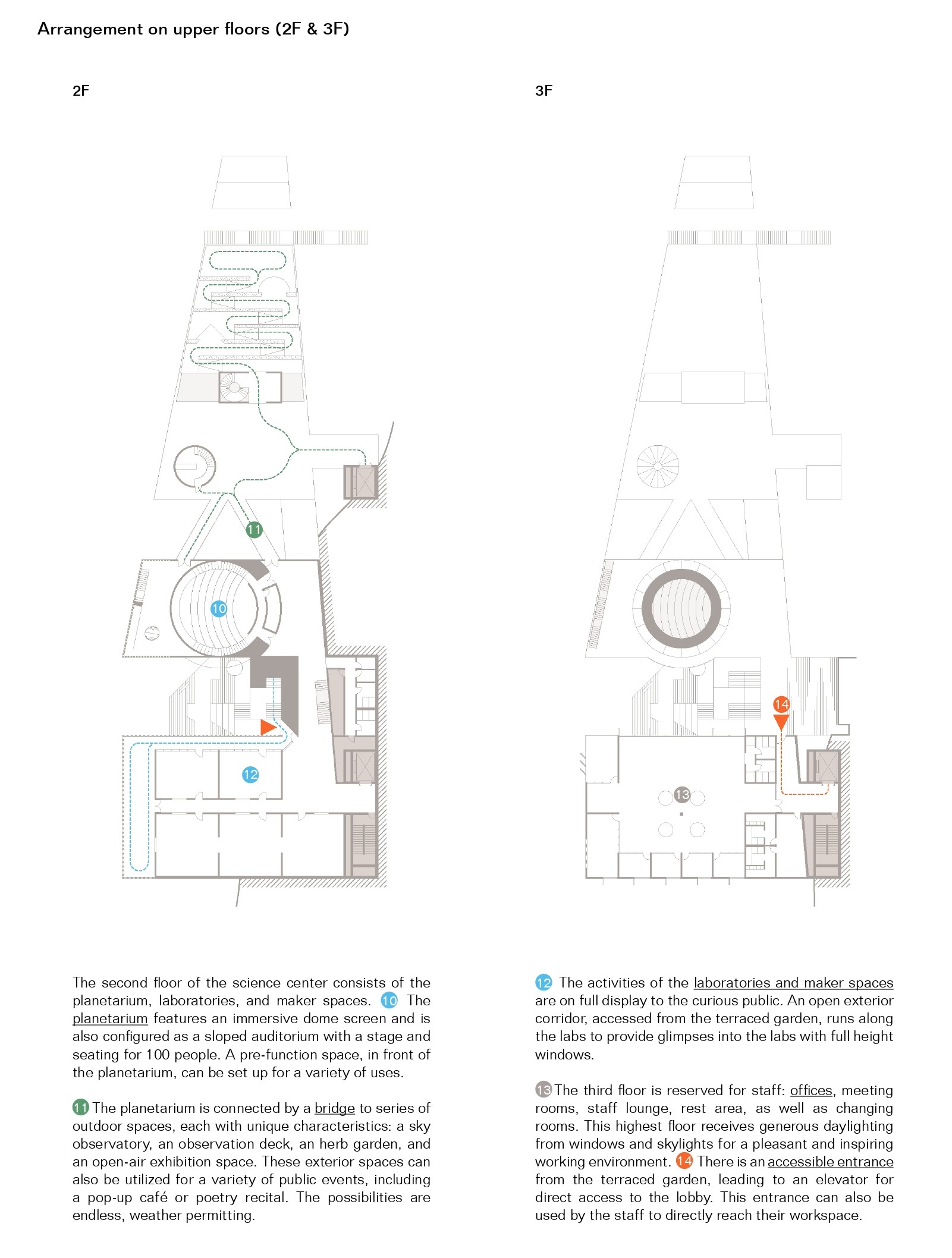
1 Herb Garden, 2 Stairs to Exhibitions, 3 Sky Observatory, 4 Planetarium, 5 Terraced Garden, 6 Open Roof Garden
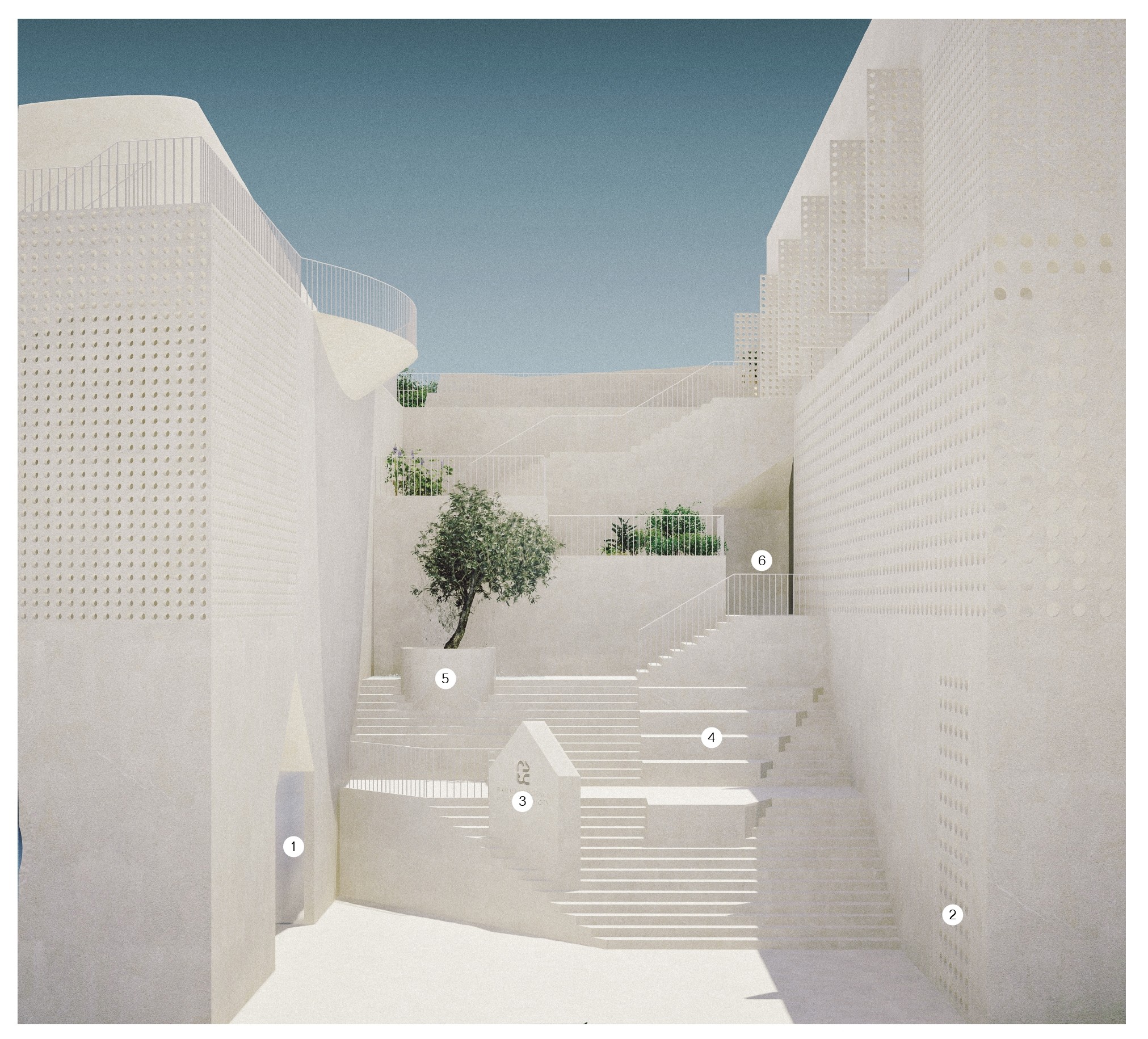
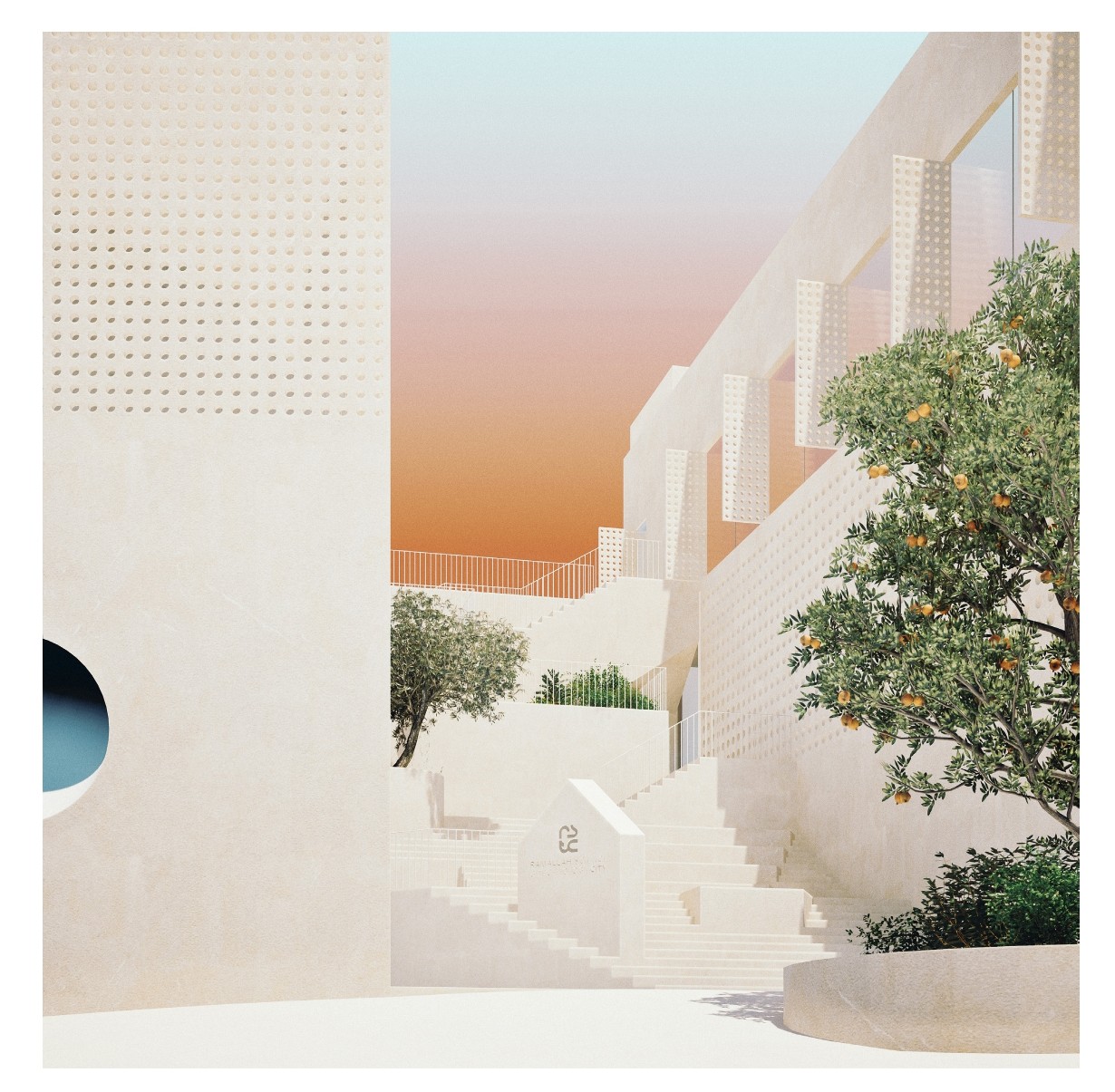
Entrance forecourt and terraced garden, inspired by sanasel, serve as an inviting public space for gathering and rest.
1 Entryway to lobby, 2 Multipurpose hall entrance, 3 Entrance marker/signage, 4 Mini amphitheatre 5 Water feature, 6 Lab Entrance
Past, Present & Future
It is crucial to weave scientific endeavors and innovation within the threads of Palestinian history. Our design approach is deeply rooted in history and place.
The proposal eschews a tendency to conceive science centers as futuristic architecture—utopian sculptures of steel and glass achievable only at great expense. While these spaces may be dazzling, they are inevitably detached from history and incongruous to its place.
Our proposal reinterprets traditional Palestinian building typologies, such as sanasel and manateer, for a timeless architecture that draws from the past to imagine the future. Limestone, local and ubiquitous, is naturally the material of choice. The design combines traditional and modern approaches to utilizing this material, including new methods of fabrication and installation. The result is an architecture exemplifying science as a grounded, daily endeavour that continues a legacy of innovation in Palestine.
Project Drawings
Location Ramallah, Palestine
Competition Competition
Program Educational
Client collaborative effort between Al Nayzak Organization and Ramallah Municipality
Office Atelier of spatial matters